
$

PAUS ID

Padjadjaran Authentication System.

$

Portal Mahasiswa

Merupakan portal informasi bagi mahasiwa UNPAD

$

Portal Staff

Merupakan portal informasi bagi staf UNPAD.

$

Email UNPAD

Layanan email berbasis Google App for Education (GAFE) bagi seluruh sivitas akademika Unpad.

UNPAD

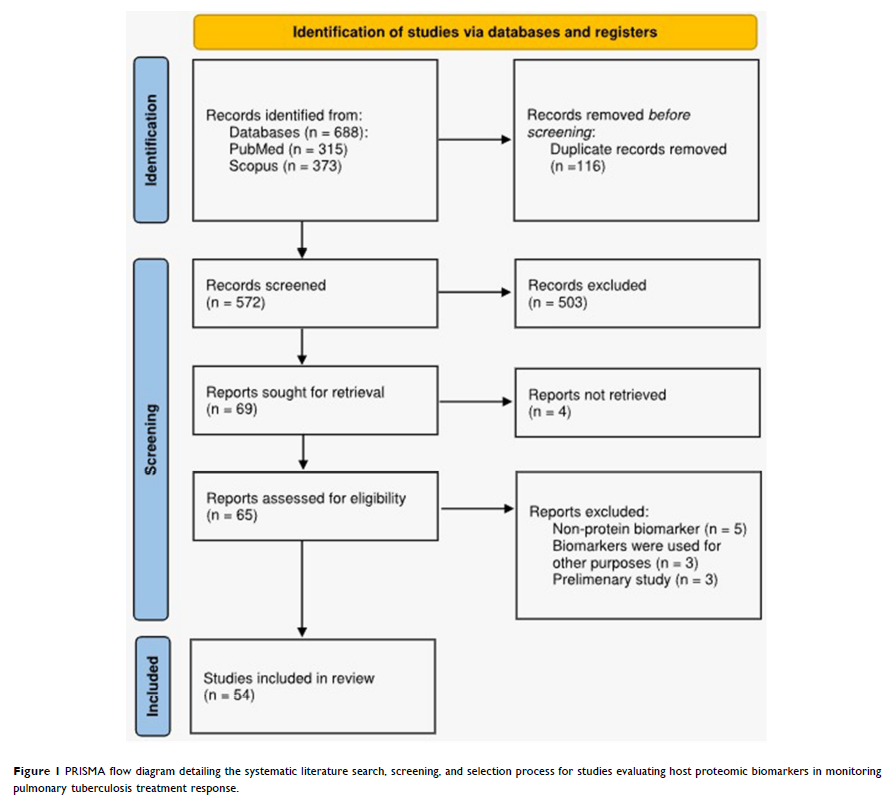
Systemic Host Proteomic Signatures as Dynamic Markers for Monitoring Pulmonary Tuberculosis Treatment Response
Systemic Host Proteomic Signatures as Dynamic Markers for Monitoring Pulmonary Tuberculosis Treatment Response

9

Authors

Nayla Majeda Alfarafisa 1,2, Dian Ayu Eka Pitaloka 2,3, Yunisa Pamela 1, Noval Yufansa Pebrian 4, Muhammad Naufal Rozaan 4, Akbar Daru Utomo 4, Fani Zakiarto 4, Lidya Chaidir 1,2

Affiliations

1Department of Biomedical Science, Faculty of Medicine, Universitas Padjadjaran, Sumedang, West Java, Indonesia; 2Center for Translational Biomarker Research, Universitas Padjadjaran, Sumedang, West Java, Indonesia; 3Department of Pharmacology and Clinical Pharmacy, Faculty of Pharmacy, Universitas Padjadjaran, Bandung, West Java, Indonesia; 4Faculty of Medicine, Universitas Jendral Achmad Yani, Cimahi, West Java, Indonesia

Background

• Monitoring TB treatment response is difficult because of low sensitivity and delayed culture results.

• Host-derived protein biomarkers reflect the immune and inflammatory response during therapy.

Methods

• Systematic review of PubMed and Scopus for studies up to September 2025.

• 54 human studies of adult pulmonary TB, covering 105 protein biomarkers in seven categories.

Key Results

• Successful treatment was linked to a rapid decline in inflammatory markers, then shifts in immune and tissue remodeling pathways.

• Markers of metabolic recovery increased over time.

• Multi-protein signatures outperformed single biomarkers.

Discussion & Conclusion

• Host proteomic biomarkers offer a dynamic, multidimensional way to monitor TB treatment response.

• Standardization and large-scale validation are needed before routine clinical use.

Related SDGs

SDG 3 – Good Health and Well-Being
The study focuses directly on improving clinical management of intrauterine fetal death (IUFD) through the efficacy of vaginal misoprostol for labor induction.

SDG 5 – Gender Equality
The research addresses women’s reproductive and maternal health, particularly obstetric care for women experiencing IUFD.

Journal Information

Journal: Infection and Drug Resistance

DOI: https://doi.org/10.2147/IDR.S627174

Correlation Between Hemodynamic ParametersMeasured by Ultrasonic Cardiac Output Monitorand Serum Troponin I Levels in Pediatric SepticShock Patients: A Prospective Observational Study

Correlation Between Hemodynamic ParametersMeasured by Ultrasonic Cardiac Output Monitorand Serum Troponin I Levels in Pediatric SepticShock Patients: A Prospective Observational Study

8

Authors
Indra Sandinirwan 1, Dzulfikar Djalil Lukmanul Hakim1, Sri Endah Rahayuningsih2, Saptadi Yuliarto3, Stanza Uga Peryoga1

Affiliations

1Pediatric Emergency and Intensive Care Division, Department of Pediatrics, Faculty of Medicine, Universitas Padjadjaran/Dr. Hasan Sadikin General Hospital, Bandung, West Java, Indonesia; 2Pediatric Cardiology Division, Department of Pediatrics, Faculty of Medicine Universitas Padjadjaran/Dr. Hasan Sadikin General Hospital, Bandung, West Java, Indonesia; 3Pediatric Emergency and Intensive Care Division, Department of Pediatrics, Faculty of Medicine Universitas Brawijaya/Dr. Saiful Anwar General Hospital, Malang, Indonesia

Background

• Pediatric septic shock is often accompanied by myocardial dysfunction and high mortality.

• Troponin I marks heart muscle injury, while USCOM offers non-invasive hemodynamic assessment.

Methods

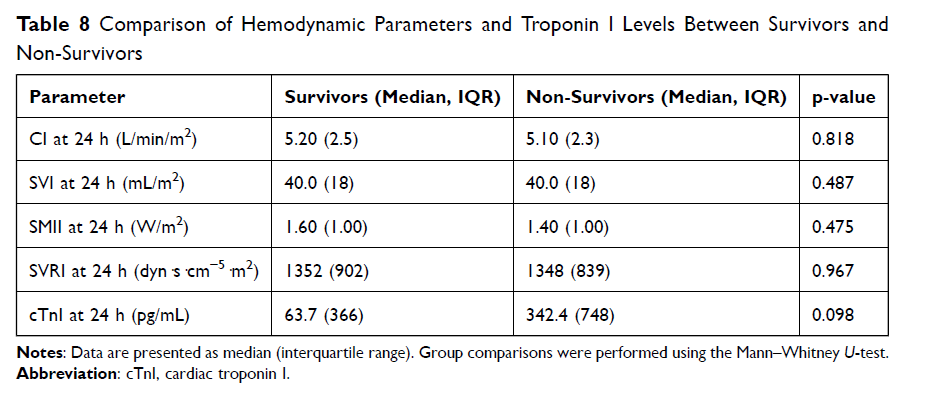
• Prospective observational study of 32 children with septic shock at Hasan Sadikin Hospital, Bandung (May–September 2025).

• Serial USCOM measurements over 24 hours; troponin I measured at 6 and 24 hours.

Key Results

• Median troponin I rose from 71 pg/mL at 6 hours to 201 pg/mL at 24 hours.

• Early changes in stroke volume index and inotropy index correlated with troponin levels.

• A higher number of inotropic agents was independently associated with higher troponin.

Discussion & Conclusion

• Troponin I rose during the first 24 hours and tracked with hemodynamic changes.

• Combining serial troponin with non-invasive hemodynamic monitoring may be valuable; larger studies are needed.

Related SDGs

• SDG 3 – Good Health and Well-being
The most relevant SDG. The study focuses on pediatric septic shock, myocardial dysfunction, hemodynamic monitoring, and factors associated with mortality in critically ill children.

• SDG 9 – Industry, Innovation and Infrastructure
Relevant because the study utilizes the Ultrasonic Cardiac Output Monitor (USCOM) as a non-invasive technology for serial hemodynamic monitoring in pediatric patients.

Journal Information

Journal: Open Access Emergency Medicine

DOI: https://doi.org/10.2147/OAEM.S606300

Efficacy of Vaginal Misoprostol for Labor Induction in Intrauterine Fetal Death: A Cohort Study from West Java Largest Hospital

Efficacy of Vaginal Misoprostol for Labor Induction in Intrauterine Fetal Death: A Cohort Study from West Java Largest Hospital

7

Authors
Vania Flowerina, Dini Hidayat, Muhammad Alamsyah Aziz
Affiliations
Obstetrics and Gynaecology Department, Faculty of Medicine Universitas Padjadjaran – Dr. Hasan Sadikin General Hospital, Bandung, Indonesia

Background

• Intrauterine fetal death (IUFD) at 20 weeks or later requires safe and effective labor induction.
• This study assessed the efficacy of vaginal misoprostol.

 Methods
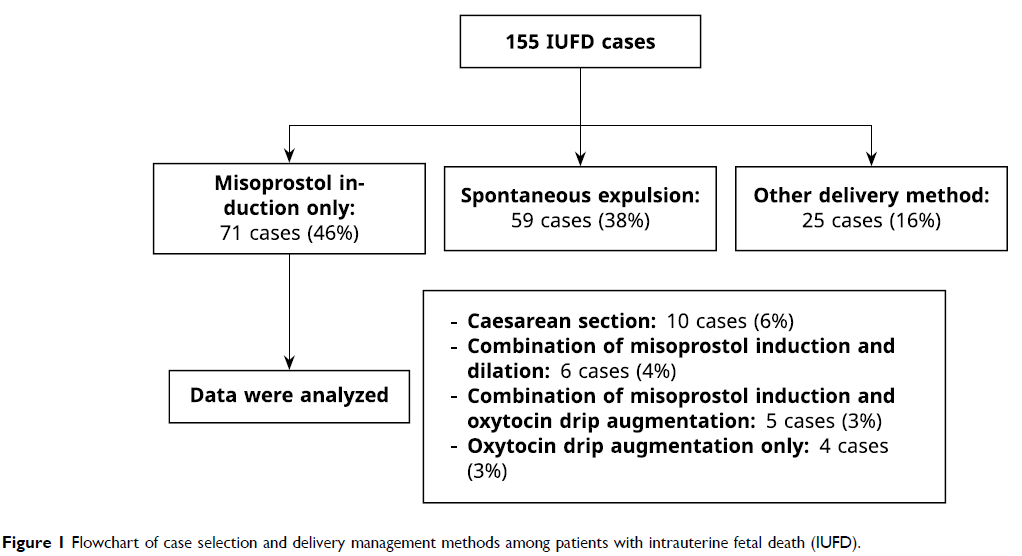
• Retrospective cohort at Dr. Hasan Sadikin General Hospital, Bandung (2021–2023).
• 71 women with IUFD at ≥20 weeks who received misoprostol-only induction, compared across gestational age groups (21–27, 28–36, and ≥37 weeks).
• Outcomes: induction-to-contraction interval, induction-to-delivery interval, and cumulative dose.

 Key Results

• Median induction-to-contraction time was 12, 6, and 3 hours across the three groups.
• Median induction-to-delivery time was 13, 10, and 6 hours.
• Median cumulative dose fell from 200 µg to 100 µg to 50 µg with advancing gestational age.

 Discussion & Conclusion
• Vaginal misoprostol was associated with shorter induction intervals and lower doses at later gestational ages.
• Prospective multicenter studies are needed to confirm optimal regimens and safety.

Related SDGs
SDG 3 – Good Health and Well-Being
The study evaluates the efficacy of vaginal misoprostol for labor induction in cases of intrauterine fetal death (IUFD), with a focus on improving clinical management and maternal care.

 SDG 5 – Gender Equality
The research focuses on women’s reproductive and obstetric health, particularly the management of IUFD and labor induction.

Journal Information
Journal: International Journal of Women’s Health
DOI: https://doi.org/10.2147/IJWH.S603527

5 1
3 5

Exploring the Relationship Between Comorbidities and Prolonged Viral Shedding in COVID-19: A Cycle Threshold Value-Based Investigation

Exploring the Relationship Between Comorbidities and Prolonged Viral Shedding in COVID-19: A Cycle Threshold Value-Based Investigation

6

Author
Rudi Wisaksana1 | PatrickPhilo2 | FloriyaniIndraPutri2 | ChrisanBimoPrayuda2 | EvanSusandi2 | Leonardus Widyatmoko3 | BachtiAlisjahbana1 | IceuDimasKulsum4 | YovitaHartantri1

Affiliation
1Division of Tropical and Infectious Disease, Department of Internal Medicine, Faculty of Medicine Universitas Padjadjaran, Hasan Sadikin General Hospital, Bandung, Indonesia | 2Department of Internal Medicine, Faculty of Medicine Universitas Padjadjaran, Hasan Sadikin General Hospital, Bandung, Indonesia | 3Department of Clinical Pathology, Faculty of Medicine Universitas Padjadjaran, Hasan Sadikin General Hospital, Bandung, Indonesia | 4Division of Pulmonology and Critical Illness, Department of Internal Medicine, Faculty of Medicine Universitas Padjadjaran, Hasan Sadikin General Hospital, Bandung, Indonesia

Background

• Some comorbidities may prolong viral RNA shedding in hospitalized COVID-19 patients.

• This study explored which comorbidities are linked to prolonged shedding using cycle threshold (Ct) values.

Methods

• Retrospective cohort at Hasan Sadikin General Hospital, Bandung (March 2020–April 2022).

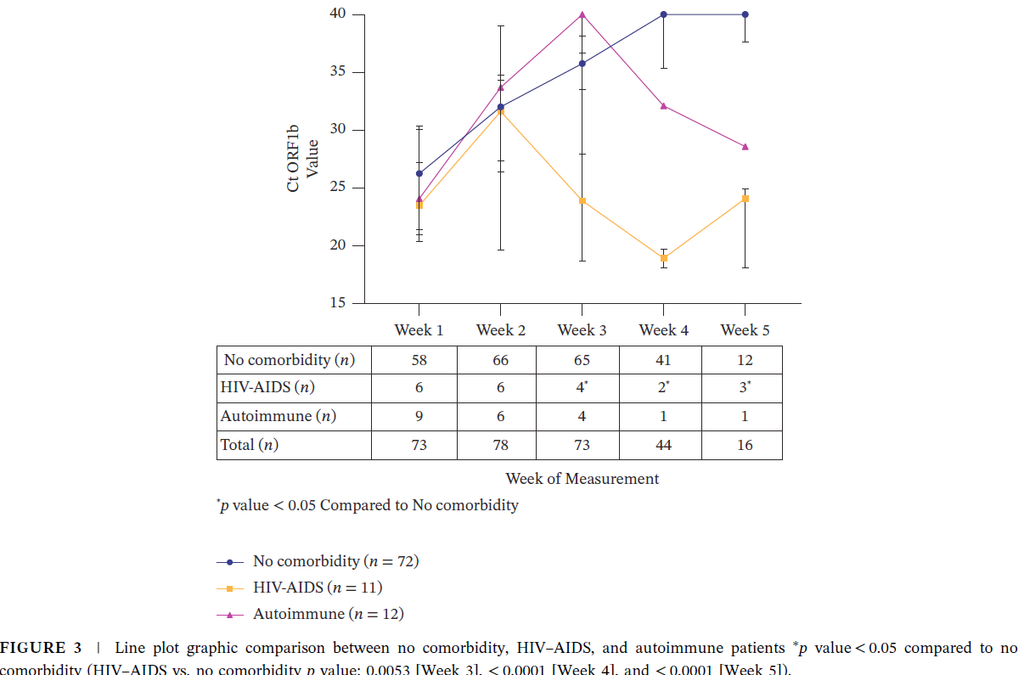
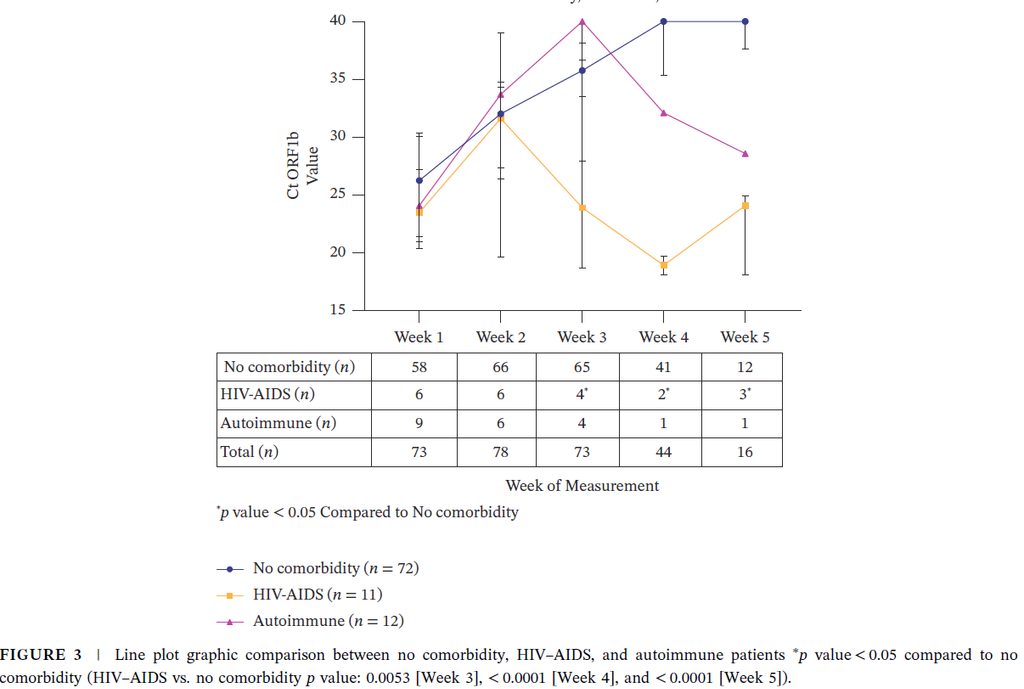
• ORF1b Ct values were tracked from week 1 to week 5 and stratified by comorbidity.

Key Results

• 279 patients were included (median age 55); most comorbidity groups showed rising Ct values over time.

• In the HIV–AIDS and autoimmune groups, Ct values peaked and then declined.

• HIV–AIDS patients differed significantly from patients without comorbidity.

Discussion & Conclusion

• COVID-19 patients with HIV–AIDS had prolonged viral shedding compared with those with other comorbidities.

• Results should be read with caution, as many patients had only a single Ct result.

Related SDGs

SDG 3 – Good Health and Well-Being
The study focuses on COVID-19, prolonged viral shedding, comorbidities such as HIV-AIDS, chronic kidney disease, diabetes, hypertension, and autoimmune disease, as well as implications for infection control and patient management.

Journal Information

Journal: Canadian Journal of Infectious Diseases and Medical Microbiology

DOI: https://doi.org/10.1155/cjid/8871861

3 4
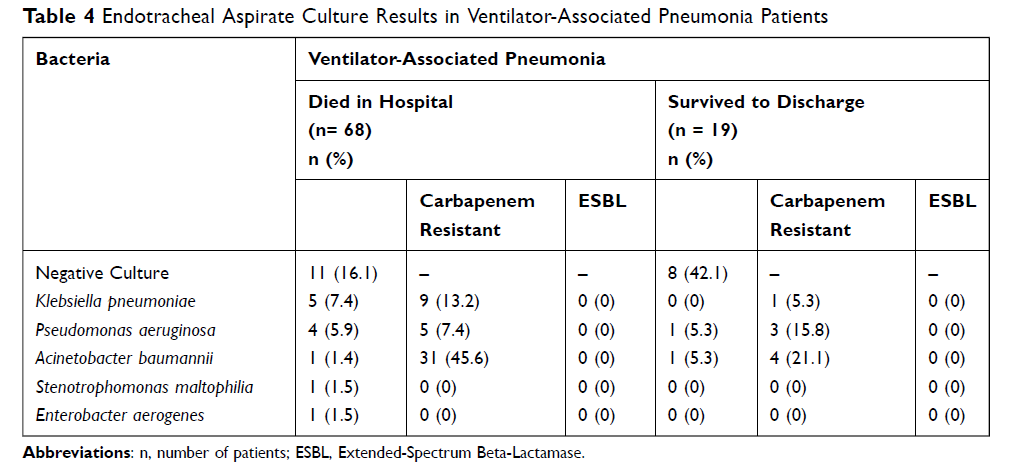
Neutrophil-to-Lymphocyte Ratio and SystemicInflammatory Response Index as Predictors ofIn-Hospital Mortality in Ventilator-AssociatedPneumonia Patients

Neutrophil-to-Lymphocyte Ratio and SystemicInflammatory Response Index as Predictors ofIn-Hospital Mortality in Ventilator-AssociatedPneumonia Patients

5

Authors
Dewi Kartika Turbawaty , Ananda Dewa, Agnes Rengga Indrati , Tiene Rostini
Affiliations
Department of Clinical Pathology, Faculty of Medicine Universitas Padjadjaran/Hasan Sadikin General Hospital, Bandung, West Java, Indonesia

Background

• Ventilator-associated pneumonia (VAP) is a common ICU complication with high mortality.

• Early risk stratification is limited by complex scores and slow microbiology results.

Methods

• Retrospective cohort of 87 ventilated adults with VAP at Hasan Sadikin General Hospital (2021–2022).

• NLR and SIRI were calculated from the first blood count on the day of VAP diagnosis.

• ROC analysis set cut-offs; the outcome was in-hospital mortality.

Key Results

• 68 of 87 patients died in hospital.

• NLR showed excellent discrimination (AUC 0.981); a cut-off above 11 gave 100% sensitivity and 89.5% specificity.

• SIRI showed good discrimination (AUC 0.860); a cut-off above 16 gave 100% specificity.

Discussion & Conclusion

• NLR and SIRI are simple, non-invasive markers that can support early risk stratification in VAP.

• They should complement, not replace, clinical severity assessment.

Related SDGs

1. SDG 3 – Good Health and Well-Being Primary and highly relevant.
The study addresses ventilator-associated pneumonia (VAP), a serious ICU infection with high mortality, and evaluates NLR and SIRI as simple markers for early risk stratification and clinical monitoring.

2. SDG 9 – Industry, Innovation and Infrastructure Highly relevant

The research evaluates accessible laboratory biomarkers derived from routine complete blood counts as complementary tools for risk stratification, particularly where complex prognostic scoring or rapid microbiology testing may be less readily available.

Journal Information

Journal: Infection and Drug Resistance

DOI: https://doi.org/10.2147/IDR.S572622

Pin It on Pinterest