

Authors
Nayla Majeda Alfarafisa 1,2, Dian Ayu Eka Pitaloka 2,3, Yunisa Pamela 1, Noval Yufansa Pebrian 4, Muhammad Naufal Rozaan 4, Akbar Daru Utomo 4, Fani Zakiarto 4, Lidya Chaidir 1,2
Affiliations
1Department of Biomedical Science, Faculty of Medicine, Universitas Padjadjaran, Sumedang, West Java, Indonesia; 2Center for Translational Biomarker Research, Universitas Padjadjaran, Sumedang, West Java, Indonesia; 3Department of Pharmacology and Clinical Pharmacy, Faculty of Pharmacy, Universitas Padjadjaran, Bandung, West Java, Indonesia; 4Faculty of Medicine, Universitas Jendral Achmad Yani, Cimahi, West Java, Indonesia
Background
• Monitoring TB treatment response is difficult because of low sensitivity and delayed culture results.
• Host-derived protein biomarkers reflect the immune and inflammatory response during therapy.
Methods
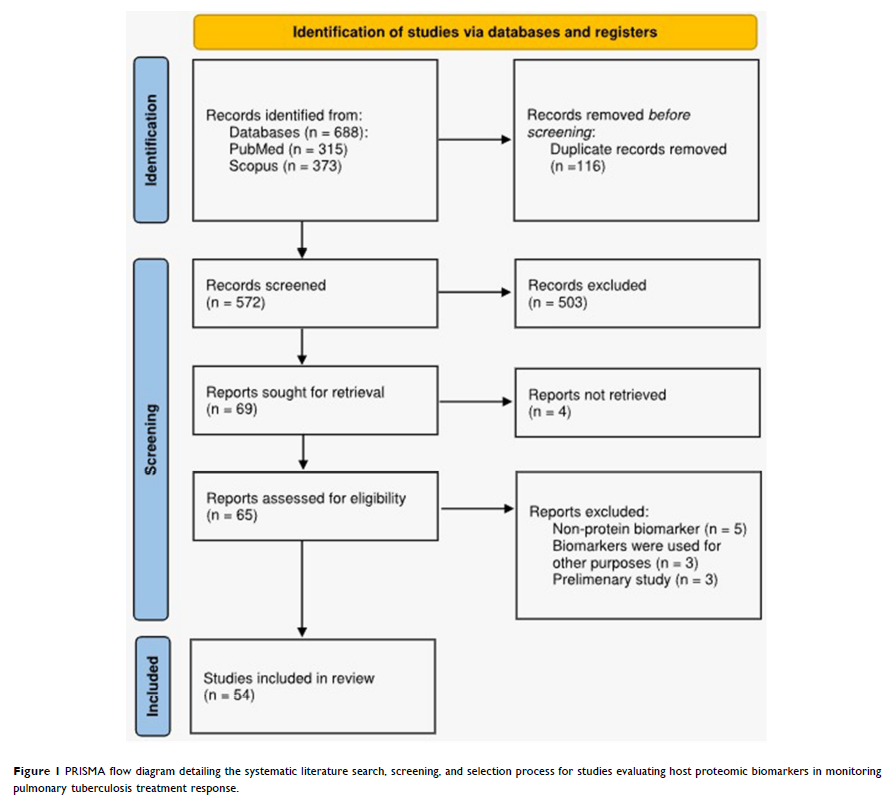
• Systematic review of PubMed and Scopus for studies up to September 2025.
• 54 human studies of adult pulmonary TB, covering 105 protein biomarkers in seven categories.
Key Results
• Successful treatment was linked to a rapid decline in inflammatory markers, then shifts in immune and tissue remodeling pathways.
• Markers of metabolic recovery increased over time.
• Multi-protein signatures outperformed single biomarkers.
Discussion & Conclusion
• Host proteomic biomarkers offer a dynamic, multidimensional way to monitor TB treatment response.
• Standardization and large-scale validation are needed before routine clinical use.
Related SDGs
SDG 3 – Good Health and Well-Being
The study focuses directly on improving clinical management of intrauterine fetal death (IUFD) through the efficacy of vaginal misoprostol for labor induction.
SDG 5 – Gender Equality
The research addresses women’s reproductive and maternal health, particularly obstetric care for women experiencing IUFD.
Journal Information
Journal: Infection and Drug Resistance






0 Comments