

Author
Rudi Wisaksana1 | PatrickPhilo2 | FloriyaniIndraPutri2 | ChrisanBimoPrayuda2 | EvanSusandi2 | Leonardus Widyatmoko3 | BachtiAlisjahbana1 | IceuDimasKulsum4 | YovitaHartantri1
Affiliation
1Division of Tropical and Infectious Disease, Department of Internal Medicine, Faculty of Medicine Universitas Padjadjaran, Hasan Sadikin General Hospital, Bandung, Indonesia | 2Department of Internal Medicine, Faculty of Medicine Universitas Padjadjaran, Hasan Sadikin General Hospital, Bandung, Indonesia | 3Department of Clinical Pathology, Faculty of Medicine Universitas Padjadjaran, Hasan Sadikin General Hospital, Bandung, Indonesia | 4Division of Pulmonology and Critical Illness, Department of Internal Medicine, Faculty of Medicine Universitas Padjadjaran, Hasan Sadikin General Hospital, Bandung, Indonesia
Background
• Some comorbidities may prolong viral RNA shedding in hospitalized COVID-19 patients.
• This study explored which comorbidities are linked to prolonged shedding using cycle threshold (Ct) values.
Methods
• Retrospective cohort at Hasan Sadikin General Hospital, Bandung (March 2020–April 2022).
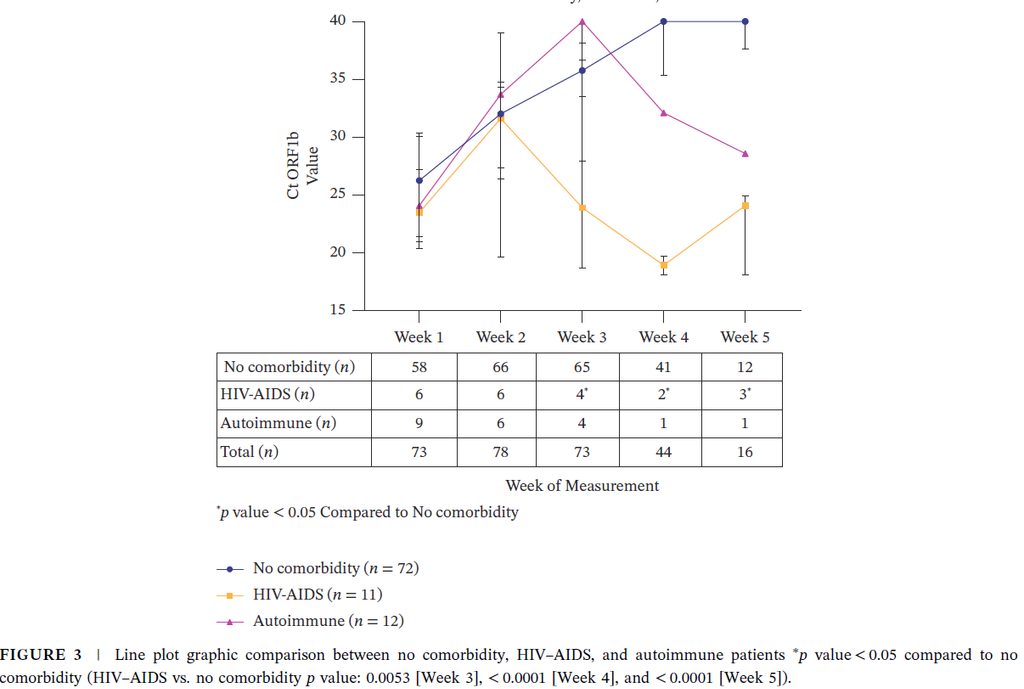
• ORF1b Ct values were tracked from week 1 to week 5 and stratified by comorbidity.
Key Results
• 279 patients were included (median age 55); most comorbidity groups showed rising Ct values over time.
• In the HIV–AIDS and autoimmune groups, Ct values peaked and then declined.
• HIV–AIDS patients differed significantly from patients without comorbidity.
Discussion & Conclusion
• COVID-19 patients with HIV–AIDS had prolonged viral shedding compared with those with other comorbidities.
• Results should be read with caution, as many patients had only a single Ct result.
Related SDGs
SDG 3 – Good Health and Well-Being
The study focuses on COVID-19, prolonged viral shedding, comorbidities such as HIV-AIDS, chronic kidney disease, diabetes, hypertension, and autoimmune disease, as well as implications for infection control and patient management.
Journal Information
Journal: Canadian Journal of Infectious Diseases and Medical Microbiology
DOI: https://doi.org/10.1155/cjid/8871861



0 Comments