
$

PAUS ID

Padjadjaran Authentication System.

$

Portal Mahasiswa

Merupakan portal informasi bagi mahasiwa UNPAD

$

Portal Staff

Merupakan portal informasi bagi staf UNPAD.

$

Email UNPAD

Layanan email berbasis Google App for Education (GAFE) bagi seluruh sivitas akademika Unpad.

UNPAD

Trends in adipokine-related studies in cardiovascular disease: A bibliometric analysis from 2002 to 2024
Trends in adipokine-related studies in cardiovascular disease: A bibliometric analysis from 2002 to 2024

25Authors
Sunita Sunita, Dr.1,4,7, Mohammad Rizki Akbar, Dr.2,4, Mohammad Ghozali, Dr.3,4, Iis Inayati Rakhmat, Dr.4,5, Agung Riyadi, MPH6, Annisa Dewi Nugrahani, MSc.1, Ratih Rinendyaputri, Dr.8, Gaga Irawan Nugraha, Dr.3,4, Mas Rizky A A Syamsunarno, Dr.3,4

Affiliations
1Faculty of Medicine Universitas Padjadjaran, Bandung, West Java, Indonesia, 2Department of Cardiology and Vascular

Medicine, Hasan Sadikin General Hospital-Faculty of Medicine Universitas Padjadjaran, Bandung, West Java, Indonesia,

3Department of Biomedical Sciences, Faculty of Medicine Universitas Padjadjaran, Bandung, West Java, Indonesia,

4Cardiometabolic Working Group Study, Faculty of Medicine Universitas Padjadjaran, Bandung, West Java, Indonesia,

5Department of Biochemistry, Faculty of Medicine, Jenderal Achmad Yani University, Kota Cimahi, Jawa Barat, Indonesia,

6Department of Nursing, Poltekkes Kemenkes Bengkulu, Bengkulu, Indonesia, 7Department of Medical Laboratory Technology,

Poltekkes Kemenkes Bengkulu, Bengkulu, Indonesia, 8Center for Biomedical Research, National Research and Innovation

Agency (BRIN), Cibinong Science Centre, Cibinong, West Java, Indonesia.

Background

• Adipokines are proteins secreted by fat tissue and are linked to obesity, inflammation, and cardiovascular disease (CVD).

• Bibliometric analysis can map research trends and international collaboration.

Methods

• Bibliometric analysis of Scopus publications from 2002 to 2024.

• Data were analysed with Biblioshiny and VOSviewer.

Key Results

• 1,283 documents from 602 sources were included.

• Output rose substantially from 2002 and peaked around 2013–2014.

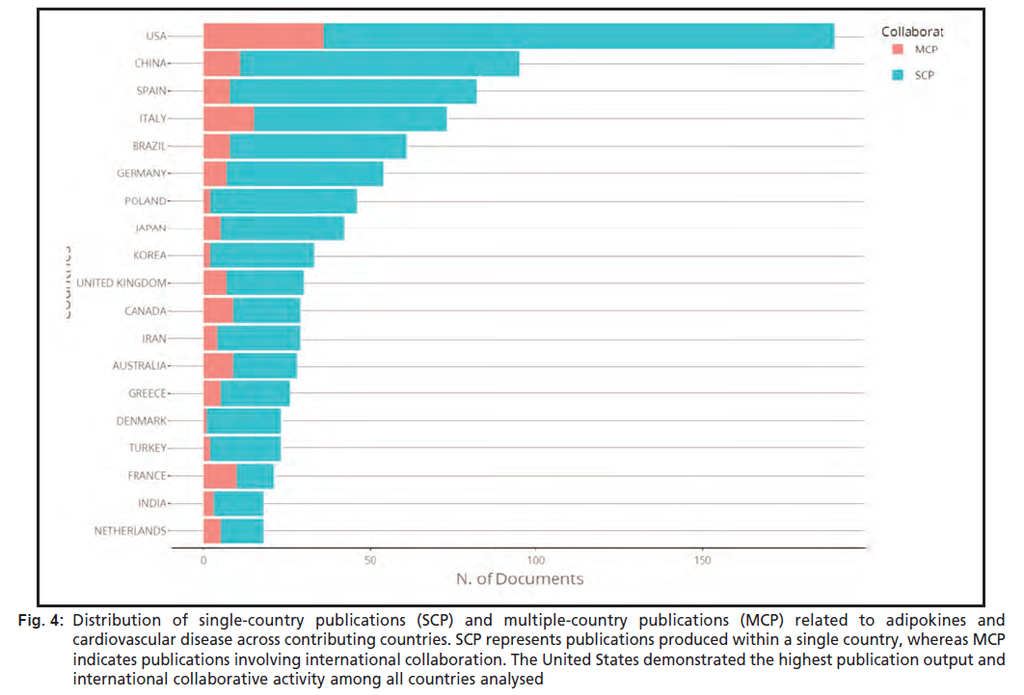
• Obesity, adiponectin, leptin, inflammation, and metabolic dysfunction were dominant themes; the United States led in output, citations, and collaboration.

Discussion & Conclusion

• Research on adipokines and CVD has expanded substantially over two decades.

• The findings may help identify future priorities on adipokines as biomarkers, preventive targets, and therapeutic approaches.

Related SDGs

SDG 3: Good Health and Well-Being – Mapping research on cardiovascular disease

SDG 17: Partnerships for the Goals – Highlighting international research collaboration

Journal Information

Journal: Medical Journal of Malaysia

DOI: Not available (no DOI listed for this article)

Recent Insights Into Circulating Adipokines in Obesity: Systematic Review and Meta‐Analysis

Recent Insights Into Circulating Adipokines in Obesity: Systematic Review and Meta‐Analysis

24

Authors
Sunita Sunita 1,2,3 | Mohammad Ghozali 2,4 | Mohammad Rizki Akbar 2,5  | Annisa Dewi Nugrahani 1 | Yuni Susanti Pratiwi 2,4  | Iis Inayati Rakhmat 2,6 | Siti Nur Fatimah 2,7 | Eko Fuji Ariyanto 2,4 | Gaga Irawan Nugraha 2,4 | Mas Rizky A. A. Syamsunarno 2,4 | Tri Hanggono Achmad 2,4

Affiliations

1 Doctoral Program, Faculty of Medicine Universitas Padjadjaran, Bandung, West Java, Indonesia | 2 Cardiometabolic Working Group Study, Faculty of Medicine Universitas Padjadjaran, Bandung, West Java, Indonesia | 3 Department of Medical Laboratory Technology, Poltekkes Kemenkes Bengkulu, Bengkulu, Indonesia | 4 Department of Biomedical Sciences, Faculty of Medicine Universitas Padjadjaran, Bandung, West Java, Indonesia |5 Department of Cardiology and Vascular Medicine, Hasan Sadikin General Hospital‐Faculty of Medicine Universitas Padjadjaran, Bandung, West Java, Indonesia | 6 Department of Biochemistry, Faculty of Medicine, Jenderal Achmad Yani University, Cimahi, Jawa Barat, Indonesia | 7 Department of Public Health, Faculty of Medicine, Universitas Padjadjaran, Bandung, West Java, Indonesia

Background

  • Adipokines are dysregulated in obesity and worsen pro-inflammatory conditions.
  • Previous findings on adipokine levels in obesity have been inconsistent.

Methods

  • Systematic review and meta-analysis (PROSPERO CRD42024525103) of adiponectin, leptin, FGF21, GDF15, IL-6, and TNF-α.
  • Searches to August 25, 2025; 30 studies in the review and 16 in the meta-analysis, using a random-effects model.

Key Results

  • Adiponectin was significantly lower in people with obesity.
  • Leptin, TNF-α, and FGF21 were significantly higher.
  • No significant differences were found for GDF15 and IL-6.

Discussion & Conclusion

  • Adiponectin, leptin, TNF-α, and FGF21 show consistent patterns and may serve as biomarkers for obesity-related risk profiling.
  • GDF15 and IL-6 vary by context, and further prospective cohort studies are needed.

Related SDGs

SDG 3: Good Health and Well-Being – Advancing biomarkers for obesity-related disease risk

Journal Information

Journal: Obesity Science and Practice

DOI: https://doi.org/10.1002/osp4.70113


Predictors of functional ability in autism spectrum disorder: A scopingreview

Predictors of functional ability in autism spectrum disorder: A scopingreview

23

Authors
Purboyo Soleka*, Eka Nurfitria, Taufan Prasetyaa, Anggia Farrah Rizqiamutia, Indra Sahrila, Burhana, Uni Gamayanib, Kusnandi Rusmila, Irvan Afriandic, Lukman Ade Chandrad, Kevin Gunawane

Affiliations 
aDepartment of Child Health, Faculty of Medicine, Padjadjaran University/Hasan Sadikin General Hospital, Bandung, West Java, Indonesia, bDepartment of Neurology, Faculty of Medicine, Padjadjaran University/Hasan Sadikin General Hospital, Bandung, West Java, Indonesia, cDepartment of Public Health, Faculty of Medicine, Padjadjaran University/Hasan Sadikin General Hospital, Bandung, West Java, Indonesia, dDepartment of Pharmacology and Therapy, Faculty of Medicine, Public Health and Nursing, Gadjah Mada University, Yogyakarta, Indonesia, eDepartment of General Medicine, Faculty of Medicine and Health Sciences, Atma Jaya Catholic University of Indonesia, Jakarta, Indonesia

Background

• Autism spectrum disorder (ASD) involves differences in social communication and repetitive behaviors.

• No standardized technique exists to predict functional ability in children with ASD, risking undetected impairments and delayed treatment.

Methods

• Scoping review following PRISMA criteria.

• Twelve articles met the inclusion criteria.

Key Results

• Tools and parameters that may help predict daily-life abilities in children with ASD were summarized.

• They varied widely, from clinical questionnaires and physical symptoms to laboratory tests and imaging.

Discussion & Conclusion

• The tools describe various functional abilities that are altered in ASD.

• They offer insights for assessment and intervention, but no standardized approach exists yet.

Related SDGs

SDG 3: Good Health and Well-Being – Supporting assessment and care for children with ASD

SDG 10: Reduced Inequalities – Promoting inclusion of children with neurodevelopmental conditions

Journal Information

Journal: Tzu Chi Medical Journal

DOI: https://doi.org/10.4103/tcmj.tcmj_319_24

Comparison of immunogenicity, safety, and efficacy of EVA71 vaccine in children: a systematic review and meta-analysis

Comparison of immunogenicity, safety, and efficacy of EVA71 vaccine in children: a systematic review and meta-analysis

21

Authors
Muhammad Gilang Dwi Putraa, Rodman Tarigan Girsanga, Rais Amaral Haqb, Teuku Fais Dutac, Frengki Prabowo Saputro Wijayantod, Artha Maressa Theodora Simanjuntakd, Eddy Fadlyanaa and Kusnandi Rusmila

Affiliations
aClinical Research Unit, Child Health Department, Faculty of Medicine Universitas Padjadjaran, Bandung, Indonesia; bMedical Education Study Program, Faculty of Medicine, Universitas Lampung, Bandar Lampung, Indonesia; cMedical Education Study Program, Faculty of Medicine, Universitas Syiah Kuala, Banda Aceh, Indonesia; dMedical Education Study Program, Faculty of Medicine Public Health and Nursing, Gadjah Mada University, Yogyakarta, Indonesia

Background

• Enterovirus 71 (EV-A71) is a principal cause of hand, foot, and mouth disease (HFMD) and can lead to severe neurological complications in children.

• Inactivated EV-A71 vaccines have been introduced.

Methods

• Systematic review and meta-analysis with a PROSPERO-registered protocol.

• Randomized trials in children searched via PubMed, Scopus, Cochrane, and ClinicalTrials.gov.

• Five phase III trials involving 36,659 children.

Key Results

• Vaccination significantly increased seropositivity in early, medium-term, and long-term follow-up.

• Seroconversion was significantly higher in vaccinated children (pooled RR 13.04).

• Efficacy against EV-A71-associated HFMD exceeded 98%, with mild adverse events comparable to placebo.

Discussion & Conclusion

• Inactivated EV-A71 vaccines show robust immunogenicity, high efficacy, and an acceptable safety profile.

• Future studies should explore long-term protection, booster schedules, and multivalent formulations.

Related SDGs

SDG 3: Good Health and Well-Being – Protecting children through vaccination

Journal Information

Journal: Expert Review of Vaccines

DOI: https://doi.org/10.1080/14760584.2026.2722426

Differences in cardiorespiratory fitness improvement following phase II cardiac rehabilitation program among post-coronary artery bypass grafting patients with varied risk factor profiles

Differences in cardiorespiratory fitness improvement following phase II cardiac rehabilitation program among post-coronary artery bypass grafting patients with varied risk factor profiles

20

 Authors

Arnengsih Nazir1, Brandon Clementius2, Badai Bhatara Tiksnadi3, Nova Sylviana4, Januar Wibawa Martha3

Affiliations

 1Department of Physical Medicine and Rehabilitation Medicine, Dr. Hasan Sadikin General Hospital, Faculty of Medicine Universitas Padjadjaran, Bandung, Indonesia 2Department of Medical, Ukrida Hospital, Jakarta, Indonesia 3Department of Internal Medicine/Cardiology and Vascular Medicine, Dr. Hasan Sadikin General Hospital, Faculty of Medicine Universitas Padjadjaran, Bandung, Indonesia 4Department of Biomedical Science, Faculty of Medicine Universitas Padjadjaran, Bandung, Indonesia

 Background

• Cardiac rehabilitation supports recovery after coronary artery bypass grafting (CABG).

• This study compared fitness improvement across patients with different risk factor profiles.

Methods 

• Retrospective analysis of 45 CABG patients who completed phase II cardiac rehabilitation (October 2023–March 2024).
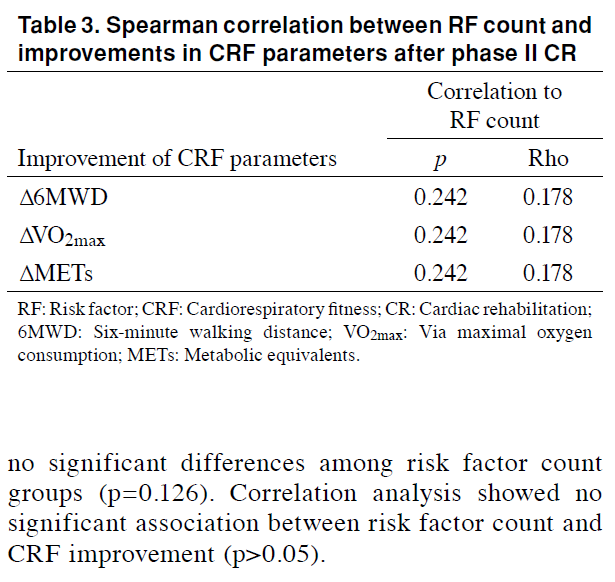
• Risk factors: obesity, hypertension, diabetes, and dyslipidemia. Outcomes: 6-minute walk distance, maximal oxygen consumption, and metabolic equivalents.

 Key Results

• The average risk factor count was 2.3 per patient; dyslipidemia was most common (73.3%).

• Fitness improved significantly in all patients and all risk factor groups.

• Patients with obesity improved significantly more than non-obese patients (p = 0.009).

Discussion & Conclusion

• Phase II cardiac rehabilitation significantly improved cardiorespiratory fitness regardless of risk factor profile.
• It should be universally recommended after CABG, with tailored interventions for patients with obesity.

Related SDGs

SDG 3: Good Health and Well-Being – Improving recovery after cardiac surgery

Journal InformationJournal: Turkish Journal of Thoracic and Cardiovascular Surgery

DOI: https://doi.org/10.5606/tgkdc.dergisi.2025.27884


Pin It on Pinterest