

 Authors
Muhammad Begawan Bestari , Muhammad Palar Wijaya, Dolvy Girawan, Nenny Agustanti, Eka Surya Nugraha
Affiliations
Division of Gastroenterohepatology, Department of Internal Medicine, Faculty of Medicine Universitas Padjadjaran, Hasan Sadikin General Hospital, Bandung, Indonesia
Background
• Assessing liver fibrosis guides the management of chronic hepatitis B (CHB).
• A non-invasive way to estimate liver stiffness is needed where transient elastography is unavailable.
Methods
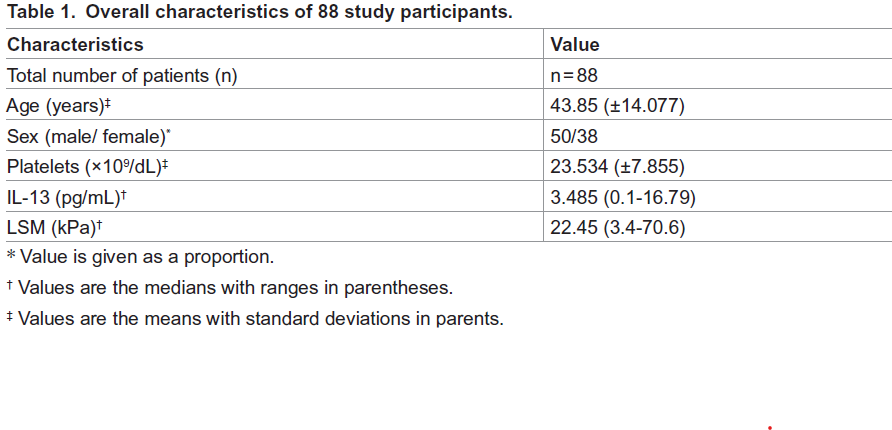
• 88 CHB patients from Hasan Sadikin General Hospital’s registry (October 2021–January 2022).
• Same-day blood count, interleukin-13 (IL-13) measurement, and transient elastography.
• Multiple linear regression was used to build a liver stiffness prediction model.
Key Results
• The model, using age, platelet count, and IL-13 status, explained 37% of the variation in liver stiffness (R² = 0.37).
• Elevated IL-13, lower platelet count, and older age were linked to higher liver stiffness.
Discussion & Conclusion
• IL-13 adds useful information to age and platelet count when estimating liver stiffness in CHB.
• The model could support non-invasive assessment where elastography is not available.
Related SDGs
SDG 3 – Good Health and Well-Being
The study focuses on chronic hepatitis B, liver fibrosis, disease monitoring, and the development of a predictive model to support clinical management. It investigates IL-13, platelet count, and age as predictors of liver stiffness and aims to contribute to improved management of chronic hepatitis B.
SDG 9 – Industry, Innovation and Infrastructure
The research develops a non-invasive predictive model using clinical and laboratory parameters to assess liver fibrosis, potentially supporting health services where transient elastography is unavailable.
Journal Information
Journal: PLoS ONE



0 Comments