

Authors
Yovita Hartantri1 | Sherly Lawrensia2 | Steven Yulius Usman3 | Nenny Agustanti4 | Rudi Wisaksana1 | Nanny Natalia Mulyani Soetedjo5 | Bachti Alisjahbana1
Affiliations
1Division of Tropical and Infectious Diseases, Department of Internal Medicine, Hasan Sadikin General Hospital, Faculty of Medicine, Universitas Padjadjaran, West Java, Indonesia | 2Department of Internal Medicine, Hasan Sadikin General Hospital, Faculty of Medicine, Universitas Padjadjaran, West Java, Indonesia | 3School of Medicine and Health Sciences, Atma Jaya Catholic University of Indonesia, Jakarta, Indonesia | 4Division of Gastroenterohepatology, Department of Internal Medicine, Faculty of Medicine, Universitas Padjadjaran, West Java, Indonesia | 5Division of Endocrine and Metabolism, Department of Internal Medicine, Hasan Sadikin General Hospital, Faculty of Medicine, Universitas Padjadjaran, West Java, Indonesia
Background
• People living with HIV (PLWH) now live longer, so chronic conditions matter more.
• Dyslipidemia and other metabolic risks for MASLD (metabolic dysfunction-associated steatotic liver disease) are common in PLWH.
Methods
• Systematic review and meta-analysis following PRISMA, registered in PROSPERO.
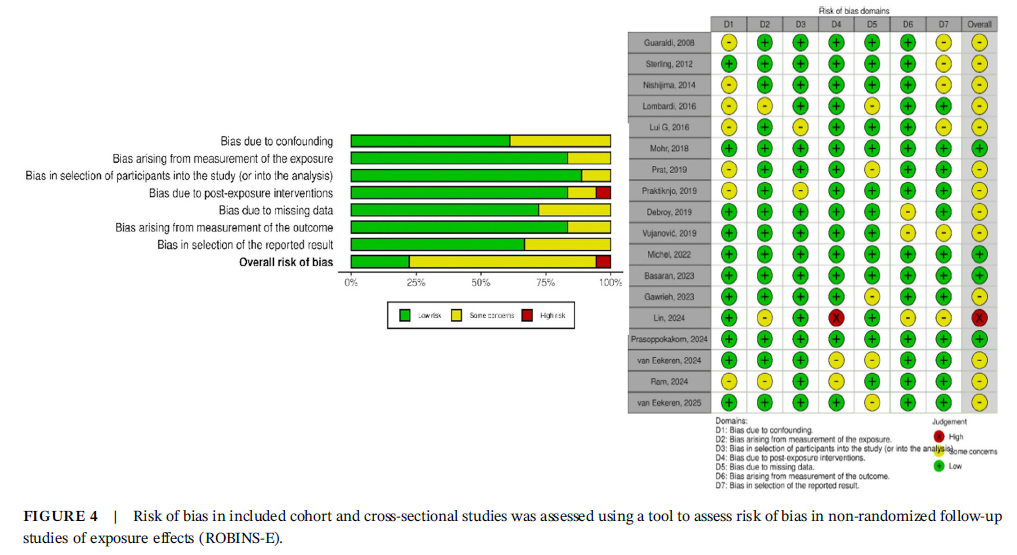
• Seven databases searched; 17 studies with 3,933 HIV-positive participants were included.
• Mean differences were calculated using a random-effects model.
Key Results
• 1,226 participants (37%) had MASLD.
• Male sex and higher BMI were associated with MASLD.
• MASLD patients had higher total cholesterol, LDL, and triglycerides, and lower HDL.
Key Results
• 1,226 participants (37%) had MASLD.
• Male sex and higher BMI were associated with MASLD.
• MASLD patients had higher total cholesterol, LDL, and triglycerides, and lower HDL.
Discussion & Conclusion
• PLWH who develop MASLD show a distinct lipid profile.
• This may represent a metabolic signature of the condition.
Related SDGs
SDG 3 – Good Health and Well-Being
The study focuses directly on HIV, MASLD, metabolic disorders, lipid abnormalities, screening, early intervention, and long-term health outcomes. The authors specifically conclude that routine lipid assessment and targeted MASLD screening are important components of HIV care.
SDG 10 – Reduced Inequalities
The research specifically concerns people living with HIV (PLWH), a population requiring particular attention in healthcare. The article also examines differences across sex, ethnicity, and geographical regions, although these factors were not the main intervention or objective of the study
Journal Information
Journal: Chronic Diseases and Translational Medicine




0 Comments