

Authors
Erda Avriyanti 1, Ranisa Larasati 1, Sithra Rengasamy2, Risa Miliawati Nurul Hidayah 1, Laila Tsaqilah 1, Miranti Pangastuti 1, Retno Hesty Maharani 1
Affiliations
1Department of Dermatology, Venereology, and Aesthetics, Faculty of Medicine Universitas Padjadjaran – Dr. Hasan Sadikin Hospital, Bandung, West Java, Indonesia; 2Department of Paediatrics, Faculty of Medicine and Health Sciences, Universiti Putra Malaysia, Serdang, Selangor, Malaysia
Background
• Prurigo nodularis (PN) is a chronic inflammatory skin disease with intensely itchy nodules and a vicious itch-scratch cycle.
• Standard treatments often give incomplete responses and require prolonged use.
Methods
• Literature review of PN epidemiology, diagnosis, pathogenesis, and treatment.
• Covered therapies from conventional treatment to biologics and targeted small-molecule agents.
Key Results
• PN involves interactions among keratinocytes, immune cells, sensory nerves, and neuropeptides.
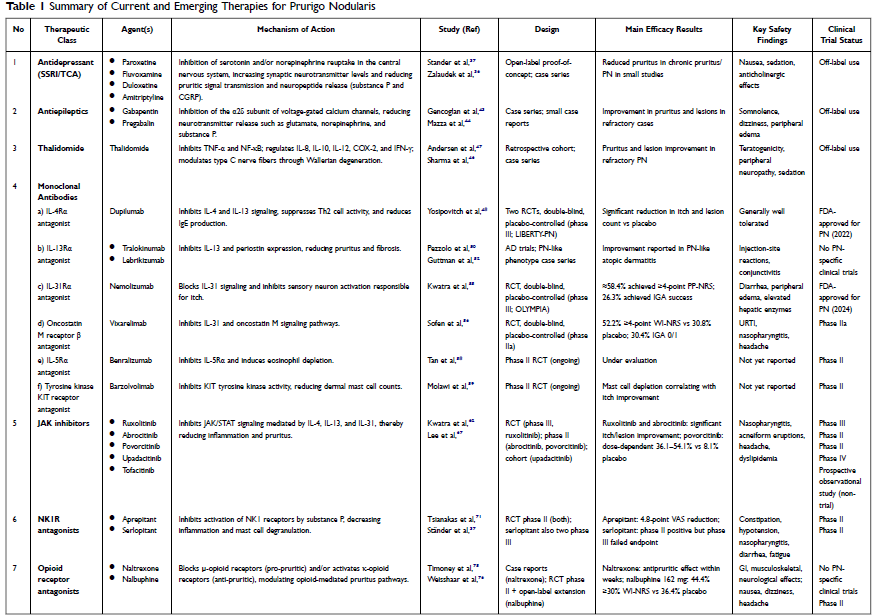
• Dupilumab is the first FDA-approved biologic for PN, followed by nemolizumab.
• Other agents, including JAK inhibitors, NK1 antagonists, and neuromodulators, are in Phase II–III investigation.
Discussion & Conclusion
• Targeted therapies are critical for improving efficacy beyond conventional treatment.
• Emerging agents act on cytokine–neuroinflammatory pathways to relieve itch and improve quality of life.
Related SDGs
SDG 3: Good Health and Well-Being – Advancing treatment of chronic itchy skin disease
Journal Information
Journal: Clinical, Cosmetic and Investigational Dermatology
DOI: https://doi.org/10.2147/CCID.S626395




0 Comments