

Authors
Adhi Kristianto Sugianli 1–4, Namira Aulia5, Yona Alvira Nur Aluna Sari5, Angkasa Ramatuan Hamdan 6, Nisa Fauziah 2,4,7, Verina Logito 1,2
Affiliations
1Department of Clinical Pathology, Faculty of Medicine Universitas Padjadjaran, Sumedang, West Java, Indonesia; 2Department of Pathology, RS Unpad University Hospital, Sumedang, West Java, Indonesia; 3Department of Supporting Medicine, Dr. Hasan Sadikin General Hospital, Bandung, West Java, Indonesia; 4Research Center for Care and Control of Infectious Disease, Universitas Padjadjaran, Bandung, West Java, Indonesia; 5Medical Professional Program, Faculty of Medicine Universitas Padjadjaran, Sumedang, West Java, Indonesia; 6Department of Internal Medicine, Faculty of Medicine Universitas Padjadjaran/RS Unpad University Hospital, Sumedang, West Java, Indonesia; 7Department of Biomedical Sciences, Faculty of Medicine, Universitas Padjadjaran, Sumedang, West Java, Indonesia
Background
• Dengue remains a serious global health challenge, with rapid disease progression.
• Clinical and diagnostic management are difficult.
Methods
• Case report of a secondary dengue infection at a university hospital.
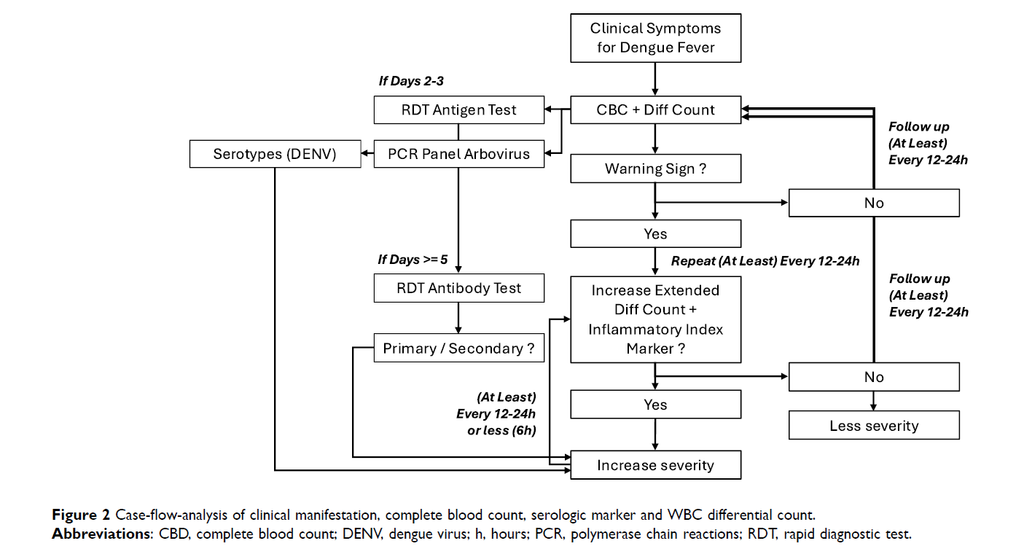
• Clinical assessment was integrated with laboratory findings, tracking dengue antigen and antibody kinetics, extended white blood cell (WBC) differential counts, and inflammatory markers.
Key Results
• Dengue antigen and antibody detection showed negative kinetics.
• Extended WBC differential counts and inflammatory index markers changed dynamically alongside clinical outcomes.
Discussion & Conclusion
• Monitoring extended WBC differentials and inflammatory indices helps detect rapid escalation of disease severity.
• These parameters are repeatable, feasible, and cost-effective, improving patient management.
Related SDGs
1. SDG 3 – Good Health and Well-Being
Most directly relevant. The article focuses on dengue infection, disease severity monitoring, early detection, diagnosis, and improving patient management. The study highlights the potential value of extended WBC differential counts and inflammatory markers for detecting rapid disease progression.
2. SDG 9 – Industry, Innovation and Infrastructure
Relevant through medical and diagnostic innovation. The article discusses the use of advanced hematology analyzers and flow cytometry-based parameters to improve the assessment of white blood cell differentiation and inflammatory responses.
Journal Information
Journal: International Medical Case Reports Journal




0 Comments