

Authors
Novi Rostikasari , Leni Lismayanti , Adhi Kristianto Sugianli , Tiene Rostini
Affiliations
Department of Clinical Pathology, Faculty of Medicine Universitas Padjadjaran/Hasan Sadikin General Hospital, Bandung, West Java, Indonesia
Background
• Early, accurate diagnosis of acute leukemia is essential for timely treatment.
• Gray scattergram patterns from hematology analyzers may signal blasts and serve as early screening.
Methods
• Retrospective cross-sectional study of acute leukemia inpatients at Dr. Hasan Sadikin General Hospital (April 2024–March 2025).
• Scattergrams were classified as gray (≥35.5% blasts) or non-gray and compared with manual microscopy using Cohen’s kappa.
Key Results
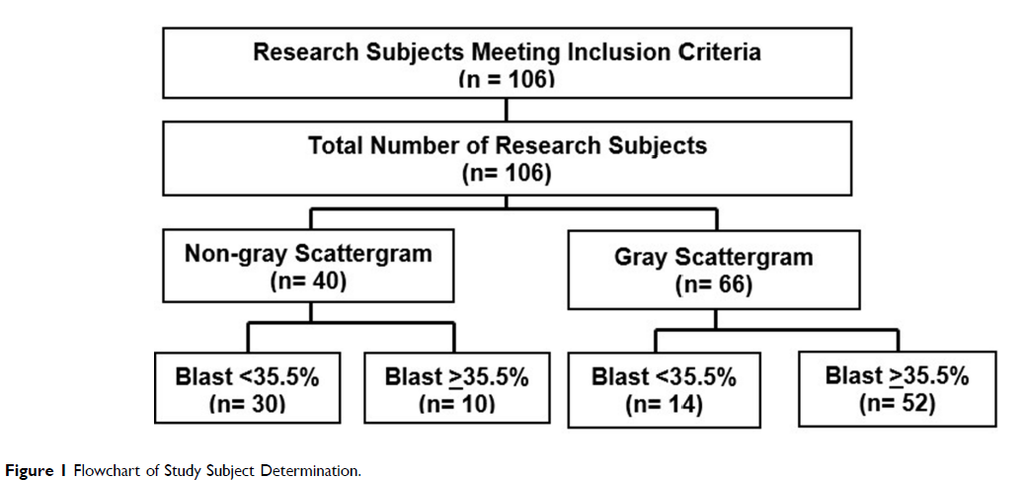
• 106 patients were included; gray scattergrams appeared in 66, of whom 52 had ≥35.5% blasts on microscopy.
• Ten patients with non-gray scattergrams also had ≥35.5% blasts.
• Agreement with microscopy was moderate (κ = 0.527).
Discussion & Conclusion
• Gray scattergrams can give early indications of blasts and serve as a supportive screening tool.
• Confirmation by blood smear or bone marrow examination remains necessary.
Related SDGs
1. SDG 3 – Good Health and Well-Being Primary and most directly relevant. The study focuses on improving the early detection and diagnostic assessment of acute leukemia, which can support timely clinical management and treatment.
2. SDG 9 – Industry, Innovation and Infrastructure
Highly relevant. The study evaluates the use of hematology analyzer technology and gray scattergrams as an automated diagnostic-support tool for detecting blasts. It explores how laboratory technology can complement conventional microscopic examination.Journal Information
Journal: Journal of Blood Medicine




0 Comments