

Autors
Tetty Yuniati 1, Fiva Aprilia Kadi 1, Aris Primadi 1, Dwi Oktari Erfanti 2, Johanes Edy Siswanto 3,4 and Ahmedz Widiasta 5,
Affiliations
1 Neonatology Division, Child Health Department, Faculty of Medicine, Universitas Padjadjaran, Hasan Sadikin General Hospital, Bandung 40161, Indonesia 2 Neonatology Division, Child Health Department, Faculty of Medicine, Universitas Padjadjaran Hospital, Jatinangor 45363, Indonesia 3 Department of Neonatology, Harapan Kita National Woman and Children’s Hospital, Jakarta 11420, Indonesia 4 Faculty of Medicine, Pelita Harapan University, Tangerang 15811, Indonesia 5 Nephrology Division, Child Health Department, Faculty of Medicine, Universitas Padjadjaran, Hasan Sadikin General Hospital, Bandung 40161, Indonesia
Background
• Serum creatinine, the routine marker for acute kidney injury (AKI), rises late.
• An earlier biomarker is needed, especially in neonates.
Methods
• Prospective cohort of preterm neonates (28–34 weeks’ gestation) at Hasan Sadikin General Hospital, Bandung.
• Serum NGAL and creatinine were measured, and the association with AKI in the first 48 hours was tested with Spearman’s correlation.
Key Results
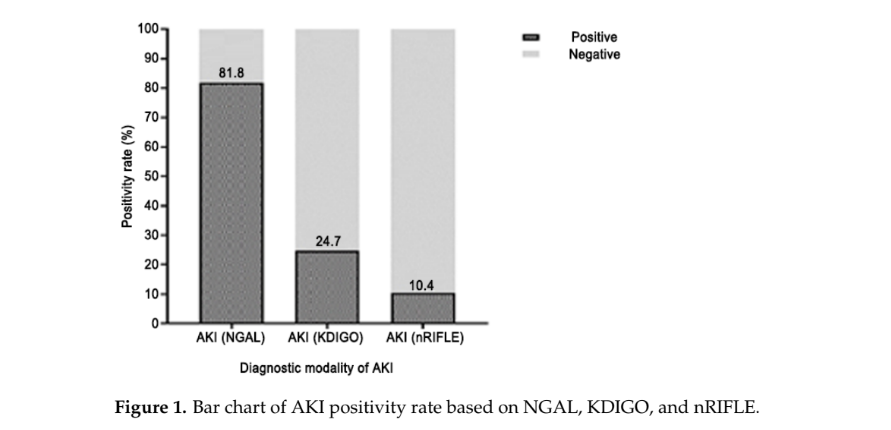
• NGAL had a much higher positivity rate for early AKI (81.8%) than creatinine by KDIGO (24.7%) or nRIFLE (10.4%) criteria.
Discussion & Conclusion
• NGAL can be used as a modality to detect AKI earlier in neonates.
• Earlier detection could help protect long-term kidney health.
Related SDGs
SDG 3: Good Health and Well-Being – Improving early detection of kidney injury in newborns
Journal Information
Journal: Kidney and Dialysis



0 Comments