

Authors
Muhammad Ary Zucha1,2, Vincentius Simeon Weo Budhyanto3, Widha Apriani Priadi1, Faizah Dwi Tirtasari4, Moh Nailul Fahmi1, Addin Trirahmanto1, Ardhanu Kusumanto1, Heru Pradjatmo1, Siti Salima 2, Ali Budi Harsono
2, Gatot Nyarumenteng Adhipurnawan Winarno
2, Dodi Suardi2, Nadia Yasmine5, Agil Wahyu Wicaksono
6, Laurens David Paulus7, Muhammad Yusuf8, Andi Kurniadi
4
Affiliations
1Department of Obstetrics and Gynecology, Division of Oncology Gynecology, Universitas Gadjah Mada – Sardjito Central Hospital, Yogyakarta, Indonesia; 2Department of Obstetrics and Gynecology, Division of Oncology Gynecology Universitas Padjadjaran-Hasan Sadikin Central Hospital, Bandung, West Java, Indonesia; 3Department of Human Genetics, Yayasan Satriabudi Dharma Setia, Tangerang, Banten, Indonesia; 4Department of Pathology Anatomy, Faculty of Medicine, Public Health and Nursing, Universitas Gadjah Mada, Yogyakarta, Indonesia; 5Department of Nutrition, Faculty of Medicine, Public Health and Nursing, Universitas Gadjah Mada, Yogyakarta, Indonesia; 6Department of Biomedical Science, Faculty of Medicine, Universitas Institut Pertanian Bogor, Bogor, West Java, Indonesia; 7Department of Obstetrics and Gynecology, Prof. WZ. Johanes Hospital, Nusa Tenggara Timur, Indonesia; 8Department of Obstetrics and Gynecology, Dharmais Central Hospital, Jakarta, Indonesia
Background
• Inflammation plays a central role in ovarian cancer, and IL-6-secreting tumors may carry altered genetic profiles.
• Studies combining IL-6 measurement with genomic profiling are lacking.
Methods
• 45 women undergoing surgery for ovarian tumors (18 malignant, 19 benign, 8 borderline).
• IL-6 was measured in serum and tumor fluid by ELISA.
• High-IL-6 cancers underwent whole-genome sequencing (ONT).
Key Results
• IL-6 levels were consistent between serum and tumor fluid.
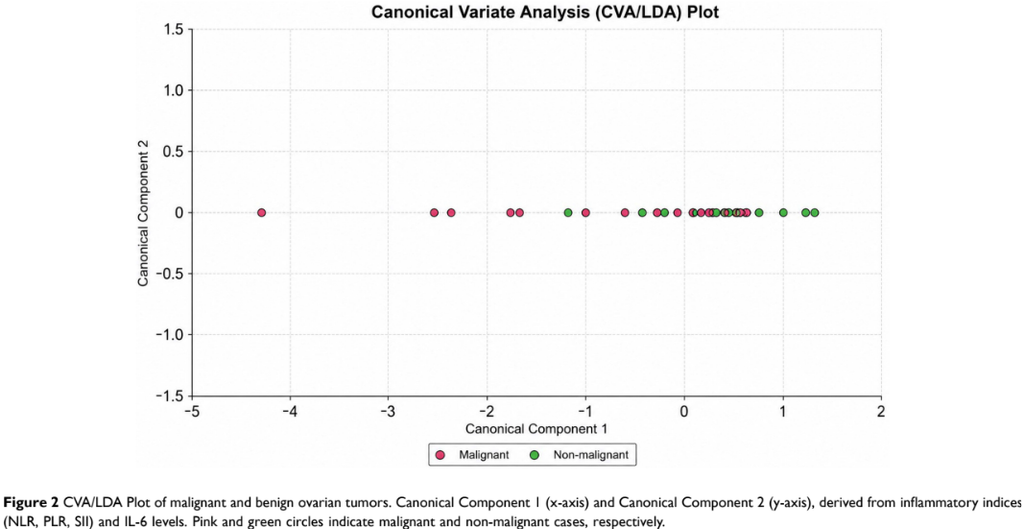
• Malignant tumors secreted significantly more IL-6 than benign ones (p = 0.027).
• IL-6-secreting cancers showed alterations in genes including MTRF1, IL-10, IL-6, APC, PAX8, PTGS2, and PACERR.
Discussion & Conclusion
• Ovarian malignancy is marked by high secretion of pro-inflammatory cytokines.
• Inflammation may disrupt the genetic landscape, offering candidate biomarkers and therapeutic targets for future validation.
Related SDGs
SDG 3: Good Health and Well-Being – Advancing biomarker discovery in ovarian cancer
Journal Information
Journal: International Journal of Women’s Health





0 Comments