

Authors
Raden Mohamad Rendy Ariezal Effendi 1,2, Hok Bing Thio1, Robert Kraaij3, Chrysanti Murad4, Reiva Farah Dwiyana2, Oki Suwarsa2 , Tamar E. C. Nijsten1 and Luba M. Pardo1
Affiliations
1Department of Dermatology, Erasmus MC, University Medical Center Rotterdam, Rotterdam, Netherlands, 2Department of Dermatology, Venereology, and Aesthetics, Faculty of Medicine Universitas Padjadjaran, Dr. Hasan Sadikin Hospital, Bandung, West Java, Indonesia, 3Department of Internal Medicine, Erasmus MC, University Medical Center Rotterdam, Rotterdam, Netherlands, 4Division of Microbiology, Department of Biomedical Sciences, Faculty of Medicine Universitas Padjadjaran, Bandung, West Java, Indonesia
Background
• Gut bacteria may play a role in atopic dermatitis (AD), but most studies focus on Western populations and examine gut or skin microbiota separately.
• Evidence on skin–gut interactions in non-Western children is limited.
Methods
• Case-control study of 218 children and adolescents aged 4–18 (111 AD cases, 107 controls) at Dr. Hasan Sadikin General Hospital, Bandung.
• 16S rRNA sequencing of paired gut and skin samples, with predicted functional pathway analysis.
Key Results
• Gut diversity did not differ between AD cases and controls; gut composition was linked to birth method, maternal education, and age.
• Several bacteria differed in AD (including Dialister invisus and Parabacteroides), along with 24 predicted functional pathways.
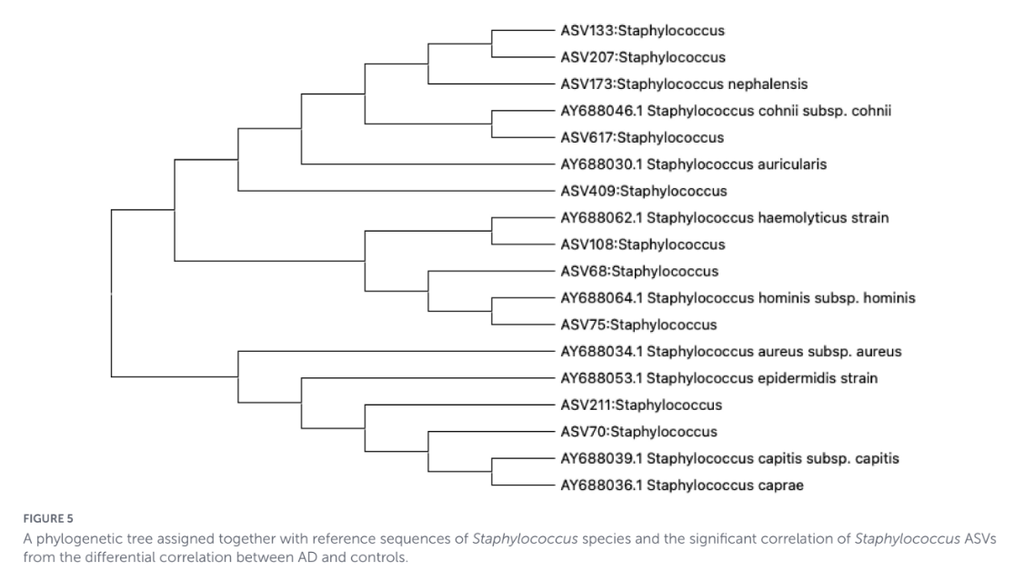
• Skin–gut correlations were modest to weak, with some skin–gut pairs differing between AD and controls.
Discussion & Conclusion
• Gut microbiota differences by AD status were modest.
• Findings suggest selective cross-site associations between skin and gut bacteria.
Related SDGs
SDG 3: Good Health and Well-Being – Improving understanding of childhood skin disease
SDG 10: Reduced Inequalities – Including non-Western populations in microbiome research
Journal Information
Journal: Frontiers in Microbiology






0 Comments