

Authors
Meilania Saraswati¹, Aria Kekalih², Lisnawati³, Nur Rahadiani³, Asmarinah⁴, Bethy Suryawathy Hernowo⁵, Agus Rizal Ardy Hariandy Hamid⁶, Chaidir Arif Mochtar⁶
Affiliations
1Doctoral Program in Medical Sciences, Faculty of Medicine, Universitas Indonesia, Jakarta, Indonesia, 2Department of Community Medicine, Faculty of Medicine, Universitas Indonesia, Jakarta, Indonesia, 3Department of Anatomical Pathology, Faculty of Medicine, Universitas Indonesia, Cipto Mangunkusumo Hospital, Jakarta, Indonesia, 4Department of Medical Biology, Faculty of Medicine, Universitas Indonesia, Jakarta, Indonesia, 5Department of Anatomical Pathology Faculty of Medicine, Universitas Padjadjaran, Hasan Sadikin Hospital, Bandung, Indonesia, 6Department of Urology, Faculty of Medicine, Universitas Indonesia, Cipto Mangunkusumo Hospital, Jakarta, Indonesia
Background
• Poor prognosis in metastatic prostate adenocarcinoma may relate to stem cell-related genes.
• This study examined cancer stem cell markers in relation to metastasis extent.
Methods
• Cross-sectional analytical study of prostate specimens from Cipto Mangunkusumo Hospital.
• 61 patients aged 50+ (2020–2023) grouped as high-volume disease (n = 38) or low-volume disease (n = 23).
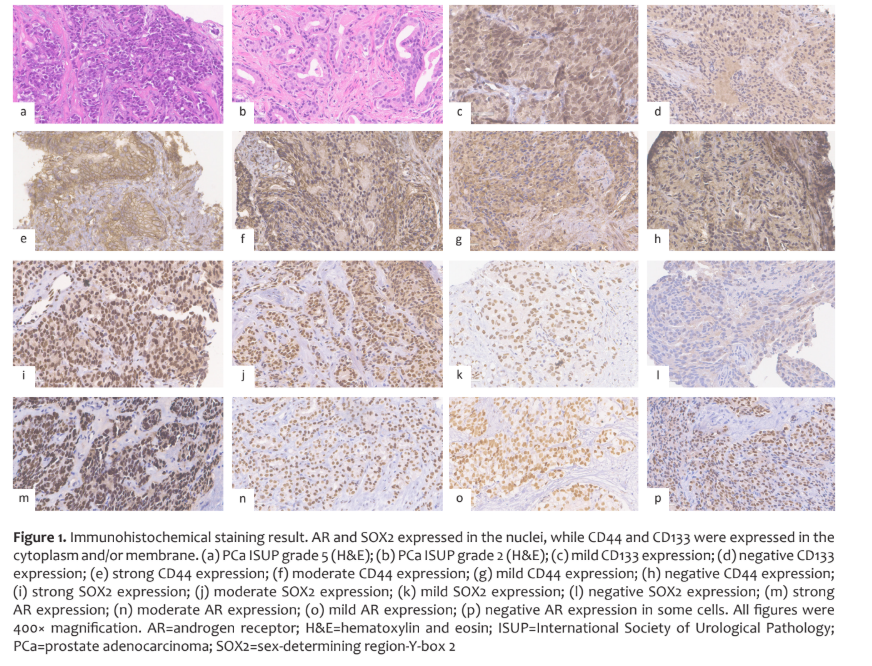
• Immunohistochemistry for CD133, CD44, SOX2, and androgen receptor, scored using H-score.
Key Results
• ISUP grade and PSA level differed significantly between high- and low-volume groups.
• SOX2 expression was significantly associated with metastatic extent.
• The low-volume group showed higher SOX2 expression in the primary tumor.
Discussion & Conclusion
• SOX2 expression in the primary tumor is linked to metastasis extent in castration-naive prostate cancer.
• Different SOX2 levels across sites and stages may reflect the cancer cells’ systemic network.
Related SDGs
SDG 3: Good Health and Well-Being – Advancing understanding of prostate cancer progression
Journal Information
Journal: Medical Journal of Indonesia


0 Comments