

Authors
Siti N. Kholidaha,b,c,*, Agnes S. Siswatid, Tri Wibawac
Affiliations
aDepartment of Biomedical Sciences, Faculty of Medicine, Universitas Padjadjaran, Eyckman 38, Bandung, IndonesiabCenter for Translational Biomarker Research, Universitas Padjadjaran, Eyckman 38, Bandung, IndonesiacDepartment of Microbiology, Faculty of Medicine, Public Health and Nursing, Universitas Gadjah Mada, Yogyakarta, IndonesiadDepartment of Dermatology, Venereology and Esthetica, Faculty of Medicine, Public Health and Nursing, Universitas Gadjah Mada, Yogyakarta, Indonesia
Background
• Non-dermatophyte mold onychomycosis is rare, and Chaetomium spp. is an extremely rare cause, with fewer than 20 cases reported worldwide.
• Misdiagnosis often leads to treatment failure and relapse.
Methods
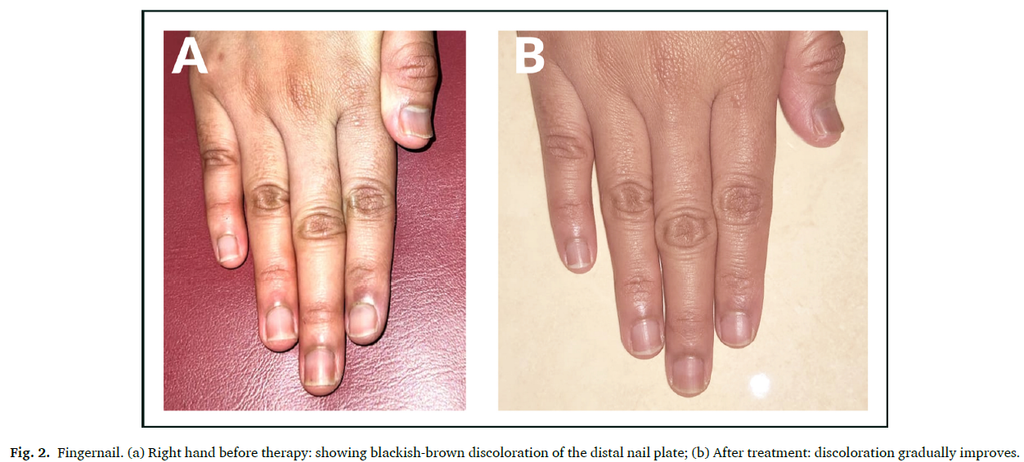
• Case report of the first documented Chaetomium onychomycosis in Indonesia, in a 29-year-old immunocompetent woman.
• Identified by direct microscopy and culture; antifungal susceptibility testing guided treatment.
Key Results
• The fungus was resistant to itraconazole and ketoconazole but sensitive to terbinafine and fluconazole.
• Three months of topical terbinafine, salicylic acid, and oral fluconazole achieved complete remission, with no recurrence at three months.
Discussion & Conclusion
• Rare mold pathogens should be considered in refractory nail infections.
• Antifungal susceptibility testing is critical for guiding combination therapy.
Related SDGs
SDG 3: Good Health and Well-Being – Improving diagnosis and treatment of rare infections
Journal Information
Journal: International Journal of Medical Microbiology


0 Comments