

Authors
Bony Wiem Lestari 1,2, Silvi Indriani 2, Adriana Viola Miranda2, Dyah Ayu Nur Safira 2, Nur Ayu Fitriani2, Raden Desy Nurhayati3, Mirza Purwitasari4, Almira Alifia2, Alamanda Larasmanah2, Iceu Dimas Kulsum5,6, Arto Yuwono Soeroto5,6
Affiliations
1 Department of Public Health, Faculty of Medicine, Universitas Padjadjaran, Bandung, West Java, Indonesia, 2 Tuberculosis Working Group, Research Center for Care and Control of Infectious Diseases, Universitas Padjadjaran, Bandung, Indonesia, 3Department of Internal Medicine, Dr. H. A. Rotinsulu Pulmonary Hospital, Bandung, West Java, Indonesia, 4 Community Lung Health Center, Bandung, West Java, Indonesia, 5 Department of Internal Medicine, Faculty of Medicine Universitas Padjadjaran, Dr. Hasan Sadikin General Hospital, Bandung, West Java, Indonesia, 6Department of Internal Medicine, Division of Respirology and Critical Care Medicine, Faculty of Medicine Universitas Padjadjaran, Dr. Hasan Sadikin General Hospital, Bandung, West Java, Indonesia
Background
• People with drug-resistant TB (DR-TB) make multiple healthcare visits before diagnosis and treatment.
• This study quantified pretreatment direct costs and the factors linked to higher costs.
Methods
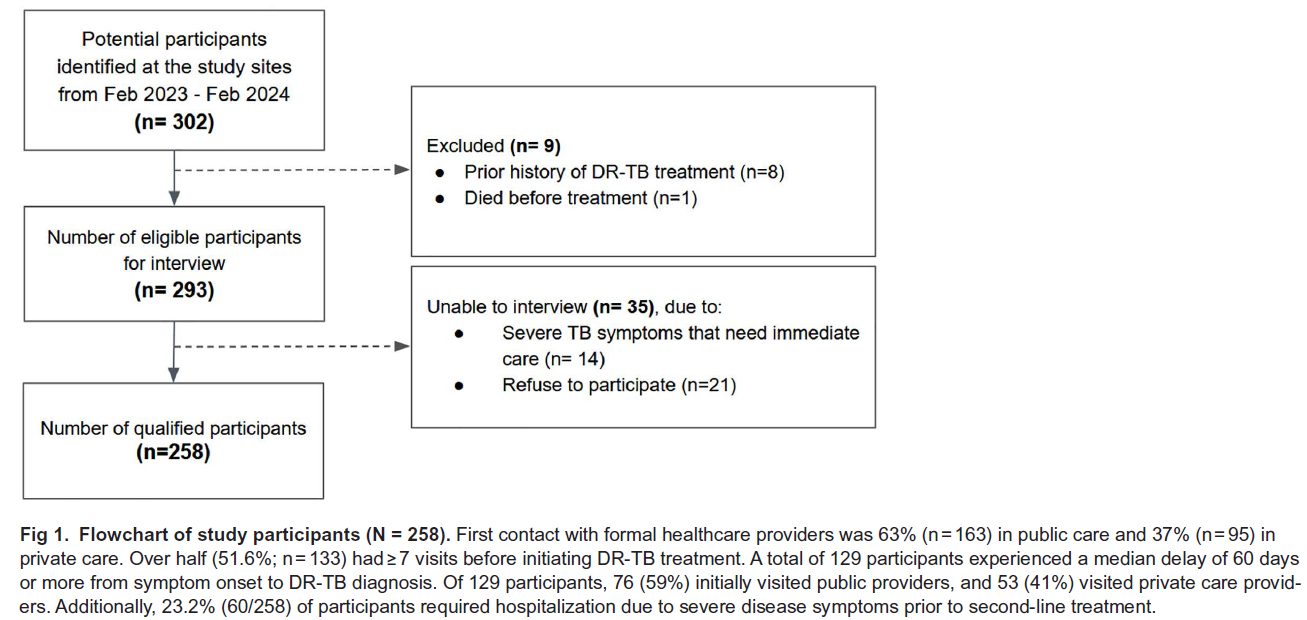
• Cross-sectional study at three DR-TB referral centers in Bandung (February 2023–February 2024).
• 258 adults with pulmonary DR-TB were interviewed about their out-of-pocket costs.
• Costs were analysed descriptively, and quantile regression identified factors linked to higher costs.
Key Results
• The median pretreatment direct cost was USD 44.6 per person (excluding hospitalization).
• Major contributors were hospitalization ($67.3), travel ($13.7), chest radiography ($11.2), and medication ($10.8).
• Higher costs were linked to rural residence, seven or more provider visits, and a first visit to a hospital or private primary care.
Discussion & Conclusion
• People with DR-TB in Indonesia incur substantial costs before treatment even begins.
• Stronger TB diagnostic infrastructure and public–private sample referral networks in rural areas can reduce extra visits and financial burden.
Related SDGs
SDG 1: No Poverty – Easing the financial burden on patients and families
SDG 3: Good Health and Well-Being – Reducing barriers to drug-resistant TB care
Journal Information
Journal: PLoS ONE
DOI: https://doi.org/10.1371/journal.pone.0352658


0 Comments