

Authors
Indra Sandinirwan 1, Dzulfikar Djalil Lukmanul Hakim1, Sri Endah Rahayuningsih2, Saptadi Yuliarto3, Stanza Uga Peryoga1
Affiliations
1Pediatric Emergency and Intensive Care Division, Department of Pediatrics, Faculty of Medicine, Universitas Padjadjaran/Dr. Hasan Sadikin General Hospital, Bandung, West Java, Indonesia; 2Pediatric Cardiology Division, Department of Pediatrics, Faculty of Medicine Universitas Padjadjaran/Dr. Hasan Sadikin General Hospital, Bandung, West Java, Indonesia; 3Pediatric Emergency and Intensive Care Division, Department of Pediatrics, Faculty of Medicine Universitas Brawijaya/Dr. Saiful Anwar General Hospital, Malang, Indonesia
Background
• Pediatric septic shock is often accompanied by myocardial dysfunction and high mortality.
• Troponin I marks heart muscle injury, while USCOM offers non-invasive hemodynamic assessment.
Methods
• Prospective observational study of 32 children with septic shock at Hasan Sadikin Hospital, Bandung (May–September 2025).
• Serial USCOM measurements over 24 hours; troponin I measured at 6 and 24 hours.
Key Results
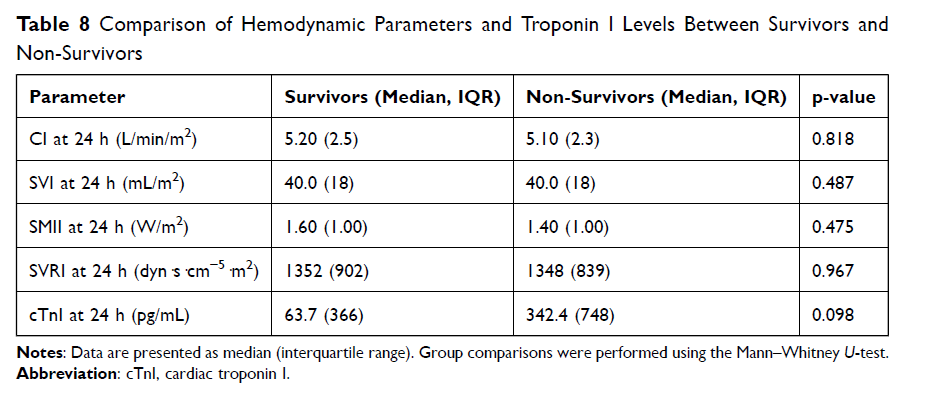
• Median troponin I rose from 71 pg/mL at 6 hours to 201 pg/mL at 24 hours.
• Early changes in stroke volume index and inotropy index correlated with troponin levels.
• A higher number of inotropic agents was independently associated with higher troponin.
Discussion & Conclusion
• Troponin I rose during the first 24 hours and tracked with hemodynamic changes.
• Combining serial troponin with non-invasive hemodynamic monitoring may be valuable; larger studies are needed.
Related SDGs
• SDG 3 – Good Health and Well-being
The most relevant SDG. The study focuses on pediatric septic shock, myocardial dysfunction, hemodynamic monitoring, and factors associated with mortality in critically ill children.
• SDG 9 – Industry, Innovation and Infrastructure
Relevant because the study utilizes the Ultrasonic Cardiac Output Monitor (USCOM) as a non-invasive technology for serial hemodynamic monitoring in pediatric patients.
Journal Information
Journal: Open Access Emergency Medicine



0 Comments