
$

PAUS ID

Padjadjaran Authentication System.

$

Portal Mahasiswa

Merupakan portal informasi bagi mahasiwa UNPAD

$

Portal Staff

Merupakan portal informasi bagi staf UNPAD.

$

Email UNPAD

Layanan email berbasis Google App for Education (GAFE) bagi seluruh sivitas akademika Unpad.

UNPAD

Tim Riset Geulis Unpad Beri Edukasi Kesehatan Reproduksi kepada Perempuan Pekerja

Tim Riset Geulis Unpad Beri Edukasi Kesehatan Reproduksi kepada Perempuan Pekerja

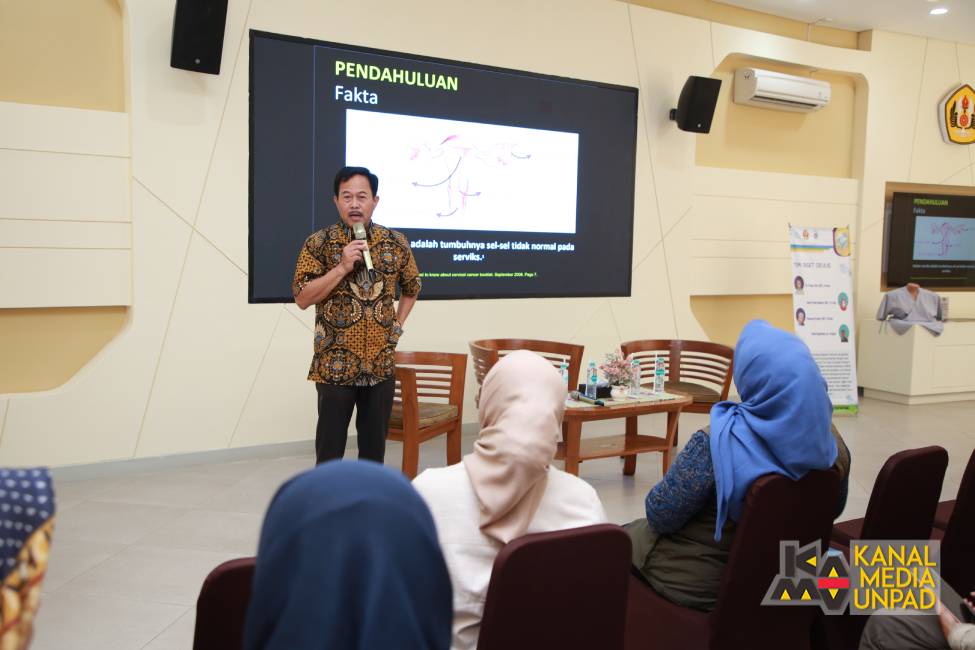
[Kanal Media Unpad] Dalam rangka memperingati Hari Peduli Sedunia, Tim Riset Geulis Universitas Padjadjaran menyelenggarakan kegiatan bertajuk “Caring-Sharing-Screening Kanker Payudara dan Kanker Rahim” yang digelar di Teater Pengetahuan, Gedung Rektorat Unpad, Jatinangor, Jumat (7/6/2024).

Ketua Tim Riset Geulis Dr. Puspa Sari. M.Keb., mengatakan, pelaksanaan kegiatan tersebut merupakan bagian dari riset yang sudah dilakukan sejak tahun 2023 lalu. Berdasarkan riset yang telah dilakukan itu didapatkan hasil bahwa masih banyak wanita khususnya yang bekerja belum memahami tentang kesehatan reproduksi.

Selain karena waktu yang dimiliki oleh wanita yang bekerja itu relatif terbatas, kurangnya informasi mengenai pentingnya deteksi dini dan pandangan masyarakat yang melihat tidak perlu melakukan screening dalam keadaan sehat menjadi salah satu hambatan yang dihadapi wanita untuk memahami kesehatan reproduksi.

“Jadi selain riset kita itu ingin melakukan pengabdian kepada masyarakat, khususnya yang internal dulu di Universitas Padjadjaran, setelah internal baru keluar,” ujar Puspa.

Puspa menyampaikan ada beberapa rangkaian kegiatan yang diselenggarakan pada acara tersebut, seperti pemberian materi mengenal kanker payudara dan kanker serviks, berbagi pengalaman bersama survivor kanker, serta screening pemeriksaan gula darah dan pap smear yang dilakukan secara gratis.

Melalui pelaksanaan kegiatan yang mengangkat tema caring, sharing, dan screening ini Puspa berharap dapat menjadi salah satu media penyampaian informasi mengenai kesehatan reproduksi wanita. Selain itu, Puspa juga berharap agar semua wanita dapat lebih peduli terhadap kesehatan reproduksinya masing-masing dan semangat menjalani gaya hidup sehat serta melakukan deteksi dini. “Jadi diharapkan para pekerja khususnya perempuan atau wanita itu nanti geulis (cantik). Bukan hanya geulis penampakan geulis saja, tetapi ada waringkas, kemudian getol, kemudian alus, kemudian mereka juga bersyukur,” kata Puspa. Puspa menyampaikan bahwa Tim Riset Geulis selalu mendapatkan dukungan dari berbagai pihak dalam setiap melaksanakan kegiatan. “Tim Riset Geulis, Alhamdulillah selalu di-support oleh Kaprodi D-4 Kebidanan, Kepala Pusdi SKIP-Nakes FK Unpad dan Dekan FK Unpad dan Direktur SDM Unpad dalam setiap kegiatan,” jelasnya. (arm)*

Silakan mencantumkan tautan/membuat hyperlink https://www.unpad.ac.id/2024/06/tim-riset-geulis-unpad-beri-edukasi-kesehatan-reproduksi-kepada-perempuan-pekerja/ apabila mengutip konten berita ini.

CALOHEA Regional Subject-Specific Reference Frameworks as Tools for Promoting Recognition and Internationalisation

CALOHEA Regional Subject-Specific Reference Frameworks as Tools for Promoting Recognition and Internationalisation

One of the tools created by the CALOHEA Erasmus+ project participants in order to facilitate recognition of degrees and periods of studies both within the ASEAN region and between the ASEAN region and other world regions are Regional Subject-Specific Reference Frameworks.


A Qualifications Framework is a structure that allows us to classify different qualifications in a geographical area covered by the framework and establish a broad equivalence of qualifications (e.g. first cycle of higher education/undergraduate, etc.) across the region. This is done through describing what a learner will have developed in terms of knowledge, skills, attitudes, competences, etc upon successfully completing a particular level of studies.

Regional Qualifications Reference Frameworks seek to establish broad equivalence among qualifications offered in more than one country. Such frameworks are intended to be used as Reference Documents – facilitating recognition but not overruling National regulations or National Qualifications Frameworks. The ASEAN Qualifications Reference Framework (AQRF) and the European Qualifications Framework (EQF) could be two good examples here.

CALOHEA Subject-Specific Qualifications Reference Frameworks facilitate recognition through allowing to:

1) clearly see which key dimensions must be addressed by each programme in the subject area;

2) establish equivalence between qualifications offered in different countries in terms of their level, regardless of how the qualifications are referred to in each of the countries;

3) express specialisation of a particular programme in terms of the sub-dimensions addressed;

4) compare the level of achievement aimed at for each of the sub-dimensions – in terms of knowledge, skills or responsibilities;

5) compare shorter periods of study as well – periods of study during which only particular types of knowledge, specific skills or capacity to perform particular responsibilities can be developed.


CALOHEA Regional Subject-Specific Qualifications Reference Frameworks state in a detailed manner what knowledge, skills, attitudes, competences, etc. are expected from graduates of a ARQF Level 6 degrees in Civil Engineering, Medicine and Teacher Education; & allow recognition across all the countries involved in the development of the Frameworks.

To see the CALOHEA Reference Frameworks, visit https://calohea.org/

The CALOHEA Erasmus+ project is coordinated by the Tuning Academy of the University of Groningen (the Netherlands) and the ASEAN University Network and is co-funded by the European Commission.


Looking for examples of authentic assessment tasks in Civil Engineering, Medicine or Teacher Education? Check CALOHEA Complications of Inspirational Examples prepared specifically for the ASEAN higher education institutions


While authentic assessment is key if you want to prepare industry-ready graduates and make sure your students achieve complex learning outcomes, many academics believe that authentic assessment is very difficult, time consuming and even expensive to implement.


To show that this is not necessarily the case, CALOHEA experts from seven ASEAN countries have created compilations of Inspirational Examples – ranging from more daring options to those that every academic can easily introduce in their course, regardless of the class size and financial limitations.


Visit the CALOHEA website to consult or download the 3 compilations – one for Medicine, one for Teacher education and one for Civil Engineering: https://calohea.org/


The CALOHEA Erasmus+ project is coordinated by the Tuning Academy of the University of Groningen (the Netherlands) and the ASEAN University Network and is co-funded by the European Commission.

CALOHEA Regional Subject-Specific Reference Frameworks as Tools for Promoting Recognition and Internationalisation

UNPAD Implementing Three Recognition Mechanism from CALOHEA PROJECT

The CALOHEA project unites thirty-one institutions across eight countries within ASEAN and five countries within Europe. The institutions create teams in the subject area of Civil Engineering, Medicine and Teacher Education. Together these teams form a Subject Area Group (SAG). The ASEAN University Network (AUN) acts as coordinator within the region, while the University of Groningen (RUG) is the project coordinator. Participating institutions were carefully selected over shared values and complementary expertise for maximum impact at institutional, national and regional levels. This large-scale project addresses the issues faced by institutions in the South-East Asia (SEA) Region. It specifically focuses on internationalization and the 3 Key Recognition
Mechanisms (RMs): One of the focal points of the meeting was the work conducted in Subject Area Groups (SAG).  The participants delved into their respective SAG to focus on each RM, starting with RM1: the creation and use of Regional Subject-Specific Qualifications and Assessment Reference Frameworks to enable greater comparability of institutional degree programs,  RM2: installment of the culture of student workload measurement as an integral part of curriculum design and  RM3: implementation of authentic assessment of internationally comparable learning outcomes in degree programs.

These are our testimonial after joining the project so far:

Mohammad Ghozali

Joining CALOHEA at first opened up our opportunities for collaboration not only with the same institutions from Indonesia, but also with international institutions from Malaysia, Philippines, and Vietnam. Of course, it will be an opportunity for us to nurture our collaborations not only in CALOHEA but also in other fields. Especially for the recognition mechanisms, it allows us to reflect on our curriculum, our framework, our student workload, and also about the assessment, is it authentic or not authentic? And we also can give comparisons to how our curriculum is with other countries and other institutions. Building regional subject specific qualifications and assessment reference frameworks enables us to make an appropriate comparison of desired graduates profiles with the help of CALOHEA Reference Frameworks. This is exactly what we need since our University now is in full speed toward internationalization.

Mohammad Ghozali, Head of International Unit of Faculty of Medicine Unversitas Padjadjaran

Measuring student workload in medical education is essential for fostering an environment conducive to effective learning, maintaining student well-being, ensuring academic success, supporting fair assessments, enhancing institutional reputation, facilitating continuous improvement, and promoting equity and inclusion. It is a critical component in preparing future medical professionals to meet the demands of their profession while maintaining a sustainable and fulfilling career. But on the other side, measuring students’ workload in medical education is a multifaceted challenge that requires careful consideration of diverse learning activities, individual differences, subjective reporting, the integration of quantitative and qualitative data, curriculum dynamics, external factors, and technological and logistical issues. Addressing these challenges is essential to develop effective workload measurement strategies that can support student well-being, enhance learning outcomes, and ensure the delivery of high-quality medical education. RM2 from the CALOHEA project inspires us with possible methods to objectively measure students’ workload. And we eventually implemented some methods from RM2 experience to our students’ e-portfolio.

Nita Arisanti, Head of the Profession Program of Faculty of Medicine Unversitas Padjadjaran

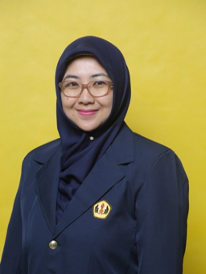
Nita Arisanti
Yuni Susanti Pratiwi

We learn from each other! For me, the most important benefit is the ability to collaborate with our fellow HEI in the medicine field. When we are discussing RM3 regarding authentic assessment, there are tons of inspirations in terms of authentic assessment. Our school finally implemented P-max and T-mex thankfully because of this project.

Yuni Susanti Pratiwi, Head of the Bachelor Program of Faculty of Medicine Unversitas Padjadjaran

Faculty of Medicine Universitas Padjadjaran in CALOHEA Erasmus+ National Project

Faculty of Medicine Universitas Padjadjaran in CALOHEA Erasmus+ National Project

Faculty of Medicine Universitas Padjadjaran takes part in the CALOHEA (Measuring and Comparing Achievements of Learning Outcomes in Higher Education in Asia) research project from 2021-2024. The CALOHEA project aims to contribute to the internationalization of higher education institutions in Southeast Asia through developing a series of interrelated measures that are indispensable for improving recognition of higher education degrees. The project is co-funded by the Erasmus+ Programme of the European Union. The ASEAN University Network (AUN) acts as a co-coordinator within the region, while the University of Groningen (RUG) is the project coordinator.

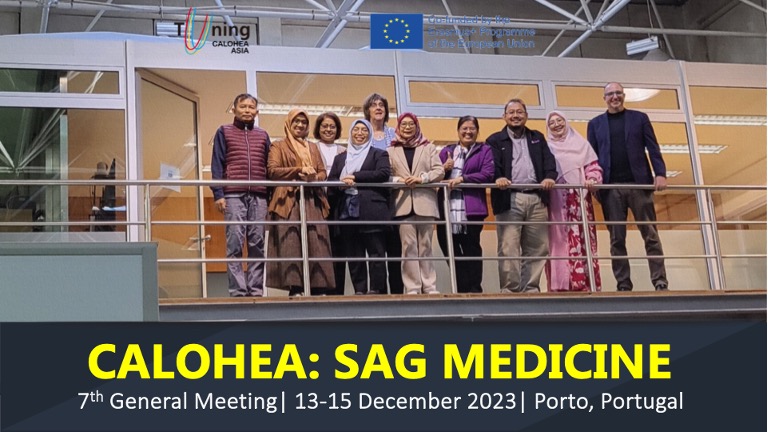
In the framework of the CALOHEA Erasmus+ project co-funded by the European Union, the representatives of Universitas Padjadjaran  will take part in the Final General Meeting which will take place in Bangkok, Thailand from 30th June to 4th July 2024. UNPAD representatives previously also participated in the 1st National Dissemination Meeting in Institut Teknologi Surabaya and 2nd National Meeting in Universitas Hasanudin. The most recent activity of this project was the 7th General Meeting that took place in Porto Portugal from 12th to 17th December 2023.

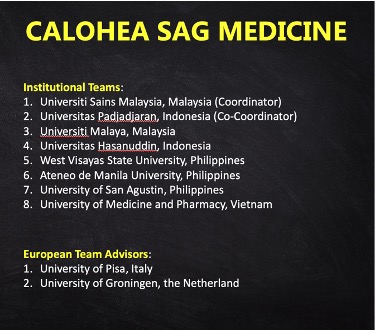
CALOHEA SAG MEDICINE 2

The complete structure of the CALOHEA team from UNPAD is as follows:
1. Team Lead : Dr. Yuni Susanti Pratiwi dr., MKes
2. Deputy Lead : Dr. Nita Arisanti., dr., M.Sc.FM
3. Team Member : Dr. Yulia Sofiatin dr., SpPD
4. Team Member : Dr.med Hasan Bashari, dr
.

UNPAD CALOHEA team that join in Specific Subject Group Medicine has carried out the project by collecting data to comprehend and construct:

1. The Meta-profiles, The meta-profiles are analyzed in light of the most recent National Qualification Framework (e.g., Indonesia: KKNI), National Standard Competency of Indonesian Medical Doctor (SKDI) and the Subject-Specific Framework (e.g., graduate profiles of the specific disciplines in a study program). Meta profiles are the expected graduate profiles, consisting of the dimension and sub-dimension elements such as the Knowledge, Skills, and Responsibility element as the Reference Framework.
2. Student workload measurement as an integral part of curriculum design.
This is undertaken by conducting online surveys and interviews to understand student workload, preparing and consulting for Desk Estimation of Student Workload. The procedure was carried out in three phases, namely 1) Analyzing student workload per course/ unit/ module, 2) Analyzing student workload for all courses/ units/ modules of the semester, and 3) Analyzing student workload planned for and communicated to students. In this last stage, students’ feedback is gathered for further recommendation.
3. Authentic assessment of internationally comparable learning outcomes.
This has been conducted by engaging lecturers and other stakeholders (such as students and employers) in coordinated efforts to ensure the gradual and full implementation of the authentic assessment (AuA). The activities for AuA should represent real-life contexts, real-world tasks, and activities, as well as realistic/simulated situations. In AuA, the students are expected to learn and know how to apply their skills in authentic tasks and projects. As for the lecturers, they are required to provide valuable feedback to students.

To learn more about the project, please visit the CALOHEA website at https://calohea.org/

CALOHEA
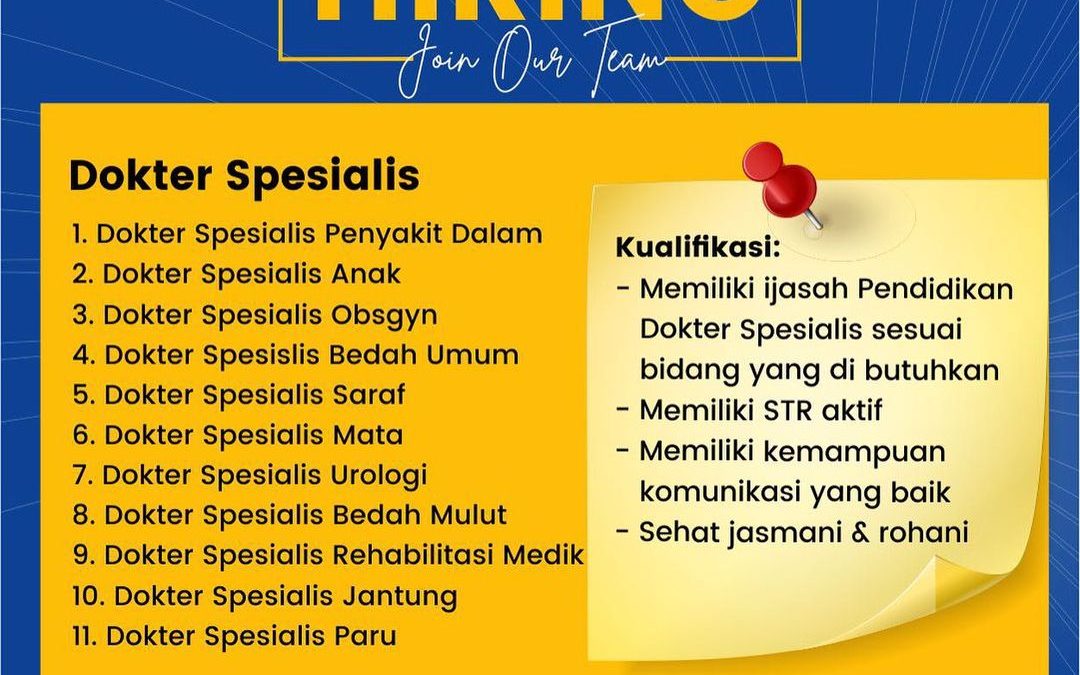
Kebutuhan Dokter Spesialis RS Priscilla Medical Center Cilacap

Kebutuhan Dokter Spesialis RS Priscilla Medical Center Cilacap

Dengan hormat,

Dalam rangka pemenuhan kebutuhan & peningkatan pelayanan Dokter Spesialis di RS Priscilla Medical Center Cilacap, maka dengan ini kami sangat membutuhkan Dokter Spesialis Mata dan Dokter Spesialis Urologi. Sehubungan dengan hal tersebut, kami mohon bantuannya untuk dapat menginformasikan kepada lulusan Program Pendidikan Dokter Spesialis (PPDS) Mata dan lulusan Program Pendidikan Dokter Spesialis (PPDS) Urologi.
Apabila terdapat Dokter Spesialis yang berminat, mohon dapat menghubungi

CP. Wahyu (082322043289) atau Feggy (081233892108).

Demikian surat permohonan ini kami sampaikan, atas perhatian dan kerjasama yang baik disampaikan terima kasih.
Lampiran: 
Tembusan :
• Dekan Fakultas Kedokteran Universitas Padjadjaran
• PT Sari Husada Bhakti


Pin It on Pinterest