

$

PAUS ID

Padjadjaran Authentication System.

$

Portal Mahasiswa

Merupakan portal informasi bagi mahasiwa UNPAD

$

Portal Staff

Merupakan portal informasi bagi staf UNPAD.

$

Email UNPAD

Layanan email berbasis Google App for Education (GAFE) bagi seluruh sivitas akademika Unpad.

UNPAD

From Operating Room to New Hope: Unpad’s Neonatal Surgery Team Tackles Spina Bifida with Precision Care

In a quiet operating theater at Hasan Sadikin General Hospital, a team of Universitas Padjadjaran surgeons prepared for one of the most delicate missions in medicine: repairing meningomyelocele, a severe birth defect where a newborn’s spinal cord protrudes through the back. The tiny patient, only hours old, lay under warm lights, her life just beginning yet already facing a major hurdle.

Led by Dr. Filla Reviyani Suryaningrat from the Faculty of Medicine, the team documented a series of such cases, aiming to improve surgical timing and post-operative outcomes for these fragile infants. Each moment in the process was critical — from anesthesia that wouldn’t overwhelm a newborn’s system, to meticulous closure of the exposed spinal cord, to infection prevention strategies that could determine survival.

Their findings showed that rapid surgical intervention, ideally within the first 24–48 hours of birth, significantly reduces infection risks and improves neurological outcomes. The team also identified crucial anesthetic protocols tailored for neonates, helping stabilize breathing and heart function during the procedure.

For parents, these results translate into clearer guidance: seek immediate referral to specialized centers upon diagnosis. For healthcare systems, it underscores the need for trained pediatric surgical teams and neonatal ICU support — resources that could save countless lives.

By refining neonatal perioperative care, this research advances SDG 3: Good Health and Well-being, positioning Unpad as a leader in pediatric surgical innovation. “Every child deserves a healthy start, no matter how complex their first day of life,” Dr. Filla said.


The Advances in Utilizing Right Ventricular Function as a Predictor of Peripartum Cardiomyopathy Recovery

Peripartum cardiomyopathy (PPCM) is a dangerous heart condition that strikes women during the final stages of pregnancy or shortly after delivery. For many mothers, especially in resource-limited countries like Indonesia, the condition is discovered too late, and doctors struggle to predict who will recover and who will face long-term heart damage. Researchers from Universitas Padjadjaran, led by Dr. Mohammad Rizki Akbar from the Faculty of Medicine, have taken a closer look at one underappreciated factor: the role of the right side of the heart in predicting recovery.

Traditionally, cardiologists have focused on the left ventricle, the main pumping chamber, when evaluating PPCM. But Dr. Akbar’s research shows that the right ventricle, which sends blood to the lungs, may hold equally important clues. Using echocardiography and advanced cardiac imaging, the team tracked patients with PPCM and found that better right ventricular function at diagnosis was strongly linked with improved recovery within months.

The discovery is significant because PPCM often affects young mothers who had no prior history of heart disease. A clearer prediction tool can help doctors decide who needs more aggressive monitoring and therapy, potentially saving lives. This is especially critical in rural hospitals, where resources are scarce and timely decisions are essential.

Beyond clinical care, the findings promote broader awareness among women and communities. Pregnant women experiencing severe fatigue, swelling, or shortness of breath should be encouraged to seek medical evaluation immediately. Early detection and routine heart checks could reduce maternal deaths—a pressing concern in Indonesia where maternal mortality rates remain among the highest in Southeast Asia.

This research strengthens public health systems by emphasizing affordable, non-invasive diagnostic tools. It also contributes to SDG 3: Good Health and Well-Being, while positioning Universitas Padjadjaran as a leader in maternal health innovation, further elevating its global impact in the Times Higher Education Rankings.

New Marine Compounds Offer Hope in Fighting Aggressive Breast Cancer, Say Unpad Scientists

Picture6

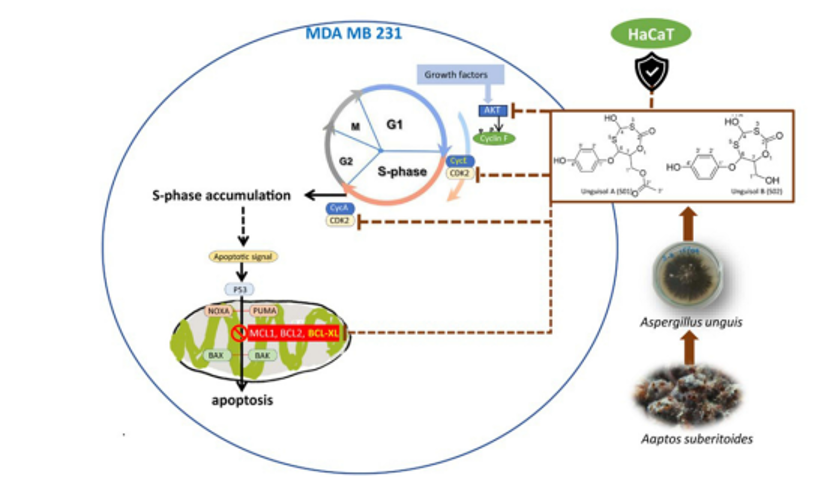
West Java, Indonesia — Scientists from Universitas Padjadjaran have discovered two new compounds from marine fungi that show powerful anti-cancer activity, especially against triple-negative breast cancer (TNBC)—one of the most difficult-to-treat forms of cancer globally.

The research was led by Dr. Muhammad Hasan Bashari from the Department of Biomedical Sciences, Faculty of Medicine, in collaboration with Dr. Mochamad Untung Kurnia Agung from the Department of Marine Science, Faculty of Fisheries and Marine Science. The team isolated the new compounds—Unguisol A and Unguisol B—from fungi living inside marine sponges collected off the coast of Harapan Island in the Seribu Islands.

Laboratory tests showed that these compounds could stop cancer cells from dividing and trigger early cell death in TNBC cells, without harming healthy cells. The research points to the genes BCL2L1 and AKT1 as targets for the compounds—genes that normally help cancer cells survive.

“Our marine ecosystems hold an incredible wealth of bioactive compounds. With careful exploration, they could lead to real breakthroughs in medicine,” said Dr. Bashari.

By using fungi rather than directly harvesting marine sponges, the researchers applied an eco-friendly method that protects marine biodiversity while advancing drug discovery. The work shows that Indonesia’s coastal ecosystems can support both environmental and health innovation.

This discovery advances SDG 3: Good Health and Well-being through promising cancer research and SDG 14: Life Below Water by promoting sustainable use of marine resources. It also strengthens Universitas Padjadjaran’s reputation as a research-driven university with local roots and global impact, reinforcing its place in the Times Higher Education (THE) Impact Rankings.


Youth and Age Affect Bull Fertility: Unpad Study Reveals Proteomic Clues

Picture5

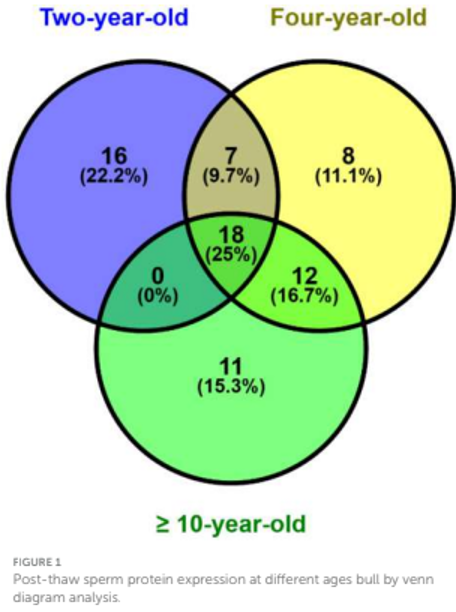
In a step toward more sustainable livestock breeding, researchers from Universitas Padjadjaran have identified how age affects sperm quality in Simmental bulls. The study, led by Dr. Faisal Amri Satrio from the Faculty of Animal Husbandry, offers new insights into male fertility that could transform cattle farming in Indonesia and beyond.

Using a proteomic approach—analyzing all proteins in sperm cells—the research found significant changes in protein expression as bulls age. These proteins are vital for fertilization, motility, and DNA integrity. Younger bulls had higher expression of proteins involved in energy metabolism and mobility, while older bulls showed signs of cellular stress and reduced function.

“This helps explain why younger bulls tend to have better fertility outcomes,” said Dr. Faisal. “Understanding these molecular changes lets us select sires more accurately for breeding programs, ensuring higher reproductive success.”

The findings are especially important for regions like West Java, where cattle farming plays a crucial role in food security and rural income. Better selection of breeding bulls means fewer animals are needed for the same fertility outcomes—saving feed, land, and costs.

This research also supports animal-friendly, cost-efficient methods. By using non-invasive protein analysis rather than trial-and-error breeding, farmers can improve productivity without harming livestock. It promotes local resilience by reducing dependence on imported breeding stock.

Aligned with SDG 12: Responsible Consumption and Production and SDG 2: Zero Hunger, this innovation reinforces Universitas Padjadjaran’s commitment to sustainable agriculture. Through its scientific leadership, the university strengthens Indonesia’s capacity for independent, high-quality food production, contributing to better regional and global outcomes reflected in the THE Impact Rankings.


Iron Overload and the Immune Puzzle: Unpad Study Sheds Light on Thalassemia in Children

In the pediatric thalassemia ward of Hasan Sadikin General Hospital, children return every few weeks for blood transfusions — a life-saving necessity that carries a hidden cost: iron overload. Excess iron can disrupt vital immune cells, leaving these young patients more vulnerable to infections.

Led by Dr. Mohammad Ghozali, Universitas Padjadjaran researchers analyzed blood from 50 children with transfusion-dependent thalassemia, focusing on monocyte subsets — a type of white blood cell crucial for immune defense. Using flow cytometry, they measured surface markers and correlated the results with iron levels, hemoglobin, and vitamin D status.

Their investigation revealed that higher iron and lower hemoglobin levels were linked to changes in specific monocyte populations, potentially signaling immune dysfunction. Surprisingly, low vitamin D — common in these patients — did not directly correlate with immune cell shifts, suggesting that iron overload may play a more immediate role in altering immune responses.

The study not only uncovers critical pathways in thalassemia-related immune impairment but also points to targeted strategies, such as iron management and immune monitoring, to improve patient outcomes. This aligns with SDG 3 by enhancing care for chronic blood disorders, while strengthening Indonesia’s expertise in pediatric hematology.


Pin It on Pinterest